Updated: | Originally published: | By Susanna Fagerholm
A strong ecosystem and end-user experience often determine whether agent capabilities become daily value or an abandoned project. Product teams can ship impressive agent features and still see slow uptake. Activation can feel unclear, choices can feel scattered and ongoing management can become a drain on the team.
MCP provides an architectural foundation that enables AI agents to reliably translate complex human intent into tangible, high-value product actions. However, building MCP capability in-house can become a long, high-risk architectural project shaped by expanding prompts, individualized customer needs, and ongoing maintenance work.
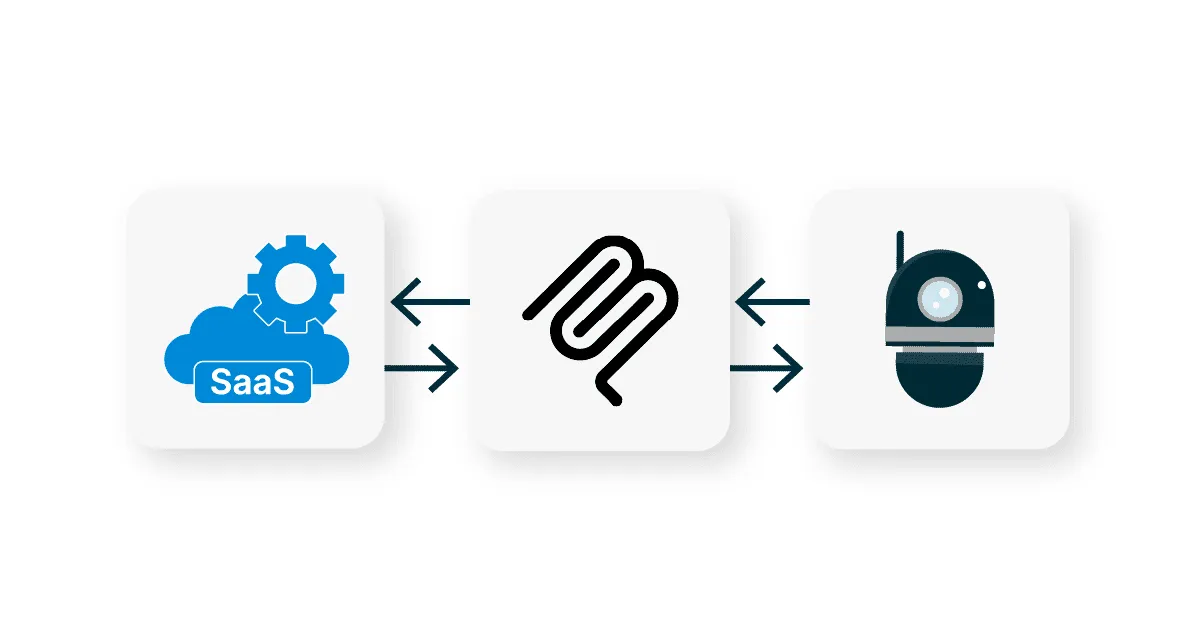
Cyclr’s secure, multi-tenanted MCP PaaS allows teams to build a more product-ready ecosystem and end-user experience from the start.
Why Adoption Improves When Discovery Happens Inside The Product
MCP establishes a standard way for agents to interact with tools and actions. Even so, the protocol alone does not determine how customers encounter and manage those capabilities. The ecosystem and end-user experience depends on how MCP Servers are packaged, surfaced, and controlled inside the product.
For SaaS companies, that packaging often matters as much as the underlying endpoints. Enterprises also expect options to be clear and manageable across teams. Therefore, a product-ready model helps MCP move from infrastructure work into an experience that customers can activate and maintain inside the platform.

Native, Embedded Agent Marketplace That Drives Self-Service Adoption
Cyclr’s MCP PaaS includes a marketplace capability that supports embedding MCP options into a SaaS product. That marketplace enables product teams to surface a curated set of ready-to-use MCP Servers directly inside the product UI, similar in concept to an app store for AI capabilities. As a result, MCP options can appear where customers already configure the product.
The marketplace is designed to support simple customer activation and management in the same interface. Cyclr describes it as an intuitive toolkit that presents easily adoptable MCP Servers with packaged endpoints to meet specific needs. In other words, MCP Servers can be offered as defined options inside the product, rather than requiring customers to assemble capabilities outside the UI.
When customers can access MCP options through a familiar navigation flow, the ecosystem and end-user experience stays cohesive. Customers can also manage those options without leaving the product context.

Customer Self-Service Tool for Advanced Users
Enterprise environments often include account-specific requirements. Custom objects and custom fields are common. Therefore, one standardized MCP Server may not fit every account model. Cyclr’s MCP PaaS supports customizable MCPs so MCP Servers can match each customer’s specific requirements without the architectural overhead.
With the MCP PaaS, teams can create customizable MCPs to match each customer’s requirements. Including situations where customers need individualized MCP Servers for custom objects. This enables SaaS companies to offer customers the capability to create custom MCPs from within the product, so power users can build and activate MCP Servers on top of the company’s existing API.
Repeatability still matters when customization scales. Cyclr’s MCP PaaS supports deployment velocity and automation by enabling pre-configured MCP Server templates. Those templates combine existing API endpoints with prompt templates and structured resources. Therefore, MCP Servers can be assembled through a consistent structure while still supporting variation when customer needs require it.
Dynamic Activation and Deactivation as Needs Change
Customer needs change over time and project priorities shift. Without lifecycle controls, enabled options can accumulate and become harder to manage. An effective ecosystem and end-user experience includes simple ways to adjust what stays active.
Cyclr’s MCP PaaS supports dynamic activation and deactivation so customers can instantly turn MCP Servers on or off as needed. Being able to control MCP server activation this way streamlines access management and supports safer experimentation. Customers can activate MCP Servers as needed, then deactivate them when workflows change.

Keeping lifecycle control inside the marketplace reduces operational drag. Customers return to the same place used for discovery and activation. That consistency becomes more important as MCP usage expands across teams. The ecosystem and end-user experience remains centered inside the product UI, because the marketplace becomes the operational home for MCP options.
Get the MCP Report
The MCP report consolidates public information from hundreds of SaaS companies to show how MCP is being adopted in practice. It maps adoption across verticals and company sizes, highlights common technical patterns, and provides a playbook that helps teams design MCP surfaces that are useful for AI assistants and safe for production use.
Multi-tenancy as a Foundation for Scaled Experience
Cyclr’s MCP PaaS is built on Cyclr’s core integration platform, bringing secure multi-tenanted architecture and enterprise-level data processing capabilities to MCP delivery.
As MCP usage expands across a customer base, architecture influences how confidently SaaS companies can offer MCP capability. By running MCP Servers in a multi-tenant architecture with strict isolation, Cyclr’s MCP PaaS helps prevent cross-tenant data leakage while enabling centralized governance. That multi-tenanted foundation is also part of what allows MCP Servers to be delivered as a managed capability across many customer accounts.
As usage scales, responsible operation and secure access remain essential. Secure customer application authentication is part of Cyclr’s multi-tenant model, and an additional layer of OAuth MCP security can also be added. Together, those controls support a clearer access boundary for MCP Server usage in environments where authenticated access is expected

Ecosystem and End-User Experience as a Practical Advantage
Agentic frameworks elevate expectations for SaaS products. Customers increasingly expect agent capabilities to arrive in a form that is discoverable, configurable, and controllable inside the product. Cyclr’s MCP PaaS supports that outcome by offering a native, embedded agent marketplace, enabling customer self-service tool creation on top of a public API, and allowing dynamic activation and deactivation from within the marketplace.
Taken together, those capabilities strengthen the ecosystem and end-user experience by making MCP feel like a product feature set rather than an architectural project. Therefore, product teams can introduce agent-ready options with a consistent in-product path to adoption, power users can extend capability through self-service MCP creation, and customers can manage access as requirements change.
Discover Cyclr’s MCP PaaS
The Agentic framework is the new standard, discover how to move beyond custom API wrappers and establish your SaaS as an AI-Ready Platform.
Why Wait? Accelerate your AI Roadmap in Days, not Quarters.


