Updated: | Originally published: | By Hayley Brown
It is a term we first coined way back when Cyclr first began and it means quite simply an integration platform as a service but is embedded within a SaaS application. In other words, an embedded iPaaS is invisible to end-users and provides a SaaS with all the integration functionality natively.
Let’s dive into the nitty gritty of embedded iPaaS.
What is an Embedded iPaaS?
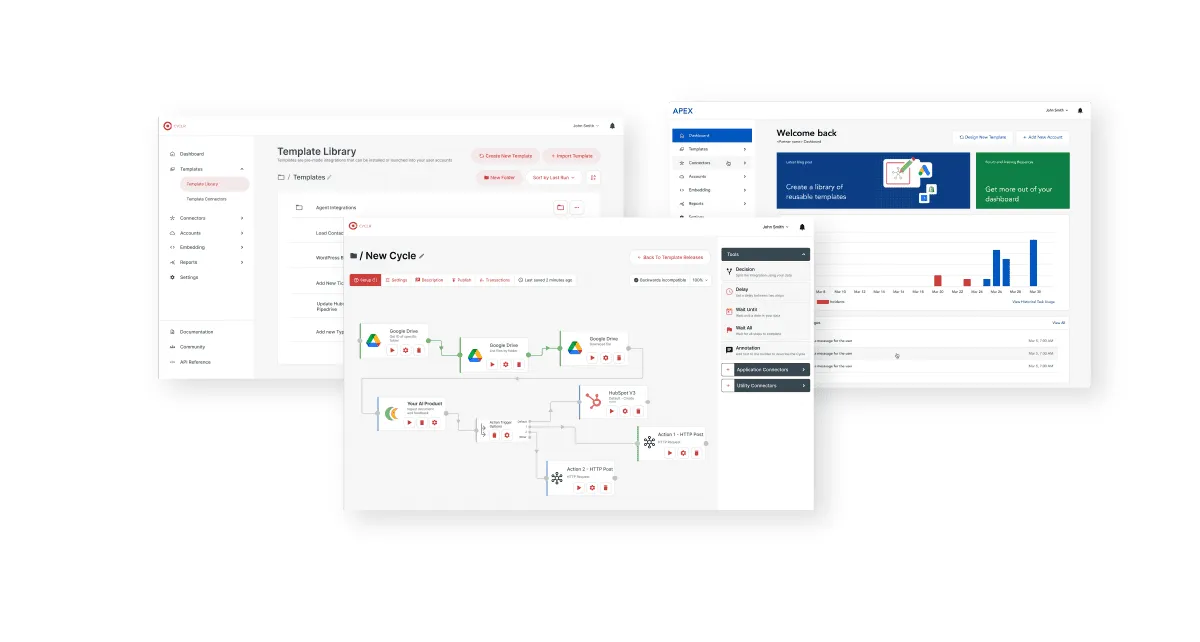
An Embedded iPaaS solution allows SaaS vendors to create, manage and deploy integration services to their clients directly from within their own platform. Thus a SaaS has the full iPaaS system and the flexibility of a white-labelled solution.
This means a SaaS can rapidly expand its integration offerings and it can achieve this without adding to the developer backlog by resolving key integration sticking points such as:
- API versioning and updating
- Individual integration maintenance
- Integration being a developer-only task
- Handling and maintaining multiple API and authentication types
Utilising an embedded iPaaS also means a SaaS doesn’t need to send users off to a separate iPaaS provider to install integrations. It also means they don’t need to have an account with a different provider other than the SaaS. As a result, friction is reduced, experience improved and the SaaS is stickier.
Don’t worry end-users are in separate multi-tenant environments which is easy for the SaaS to manage.
So, to sum up, an embedded solution enhances a SaaS product and expands the native integration library. It is therefore much more focused on expanding a SaaS product offering rather than automating internal processes.
What is the difference between embedded iPaaS and iPaaS?
Ultimately, the difference between an embedded iPaaS and iPaaS is that an embedded version focuses on expanding a SaaS and its integrations for its customers. Whereas an iPaaS focuses on integrating an organisation’s business processes.
For example, Cyclr is an embedded iPaaS and Zapier is an iPaaS. The two shouldn’t be seen as the same because Cyclr is firstly an embedded iPaaS that sits within a SaaS application. Whereas Zapier sits externally from an application and exposes users to potential competitors.

Another key difference between an embedded iPaaS and an iPaaS is that users have to have an active role in the integration management process with an iPaaS. Whereas an embedded option removes this active role and keeps things simple for a SaaS user.

Typically, an embedded iPaaS is highly scalable. They are designed to expand as a SaaS grows from a small startup to a large enterprise. It is, therefore, a slick, value-add solution that can accelerate the development of your platform integrations.

Who Uses Embedded iPaaS? Examples by SaaS Type
1. CRM Platforms
Example SaaS: A vertical CRM for real estate or recruitment.
Integration Needs:
- Email marketing platforms
- Accounting tools
- E-signature tools
- Marketing automation systems
How Embedded iPaaS Helps:
Instead of building and maintaining dozens of point-to-point integrations, the CRM embeds an integration marketplace powered by embedded iPaaS.
Business Impact:
- Customers self-activate integrations
- Reduced engineering workload
- Faster onboarding
- Increased stickiness (integrations increase switching costs)

2. Fintech & Accounting SaaS
Example SaaS: Expense management or invoicing software.
Integration Needs:
- Banking APIs
- ERP systems
- Payment gateways
- Tax platforms
Use Case:
Finance teams want transactions automatically reconciled across systems.
How Embedded iPaaS Helps:
- Automates transaction syncing
- Handles complex data mapping
- Provides monitoring and error handling
Business Impact:
- Reduces financial reconciliation time
- Improves reporting accuracy
- Enables enterprise-level integrations without enterprise engineering headcount
3. HR & Payroll SaaS
Example SaaS: HR or workforce management platform.
Integration Needs:
- Payroll systems
- Benefits providers
- Time tracking tools
- Background check services
Use Case:
HR teams need automatic data sync between systems (new hires, salary updates, terminations).
How Embedded iPaaS Helps:
- Real-time employee data synchronization
- Pre-built connectors reduce custom dev work
- Secure handling of sensitive employee data
Business Impact:
- Eliminates manual data entry
- Reduces compliance risk
- Speeds up HR workflows
4. E-commerce & Retail SaaS
Example SaaS: Inventory management or multi-channel commerce platform.
Integration Needs:
- Marketplaces (Amazon, eBay, Shopify)
- Shipping providers
- Payment processors
- Accounting software
Use Case:
Merchants need stock levels and orders synced across multiple channels.
How Embedded iPaaS Helps:
- Automates order and inventory sync
- Prevents overselling
- Enables new marketplace connections quickly
Business Impact:
- Better customer experience
- Reduced operational errors
- Increased expansion opportunities
5. Vertical / Industry-Specific SaaS
Example SaaS: Construction management, healthcare SaaS, or property management platform.
Integration Needs:
- Industry-specific tools
- Document management systems
- Compliance platforms
- Legacy systems
Use Case:
Customers rely on niche software ecosystems that must interconnect.
How Embedded iPaaS Helps:
- Allows rapid deployment of connectors in specialized industries
- Supports legacy API constraints
- Provides white-labelled integration UX
Business Impact:
- Differentiates from competitors
- Increases enterprise deal size
- Supports complex customer requirements without bespoke projects
Strategic Reasons SaaS Companies Adopt Embedded iPaaS
- Reduce Engineering Burden: Avoid building and maintaining dozens of direct integrations.
- Accelerate Enterprise Sales: Enterprise prospects often require integration capabilities before signing.
- Monetise Integrations: Some SaaS vendors charge for premium integrations or advanced automation features.
- Create an Integration Marketplace: An embedded iPaaS allows SaaS platforms to offer an app store-like experience.

Ideal for Enterprise Level Embedded Integration
There are lots of moving parts when an organisation hits the Enterprise level. Enterprise leaders want to ensure they stay in control, increase efficiency, continually innovate and stay secure. This is to support their ongoing digital transformation and integration strategies.
An embedded system can support this, especially an embedded iPaaS, through implementing a data orchestration layer. They are able to modern legacy systems, enhance product features, automate processes and help change business culture to be more innovative and collaborative. As well as ensure integration control and security.
Not only that it can also help an Enterprise save time and money while also being more agile and adaptable than coding integrations themselves. It has been noted by Forrester that “an embedded iPaaS is a strategic element of digital transformation.”
The adoption of digital technologies such as an embedded iPaaS can help improve overall business efficiency, innovation and value. As it fundamentally changes how the business operates, the business model and how value it is delivered to customers.
Embedded iPaaS, the new kid on the block?
You’d think seeing as the term isn’t recognised by the software bible itself, Gartner. But it’s actually been around a while and is continually evolving and expanding amongst software companies. Especially, Enterprise level organisations who want to excel in the SaaS market.
These products are continually breaking new ground and providing useful integration tools for SaaS applications to further develop, customise and innovate.


