Updated: | Originally published: | By Hayley Brown
In the tech and software industry integration templates are defined as pre-built, reusable blueprints. They are designed to connect different software apps, systems and data sources. Integration templates eliminate the need to build workflows from scratch for each use case or customer. Instead they provide ready-made connections, data mappings and automation rules.
Integration templates typically operate in one of two ways:
- Technical integration blueprints: these are pre-defined workflows within integration platforms such as Zapier, n8n and Cyclr that map out how data connects and flows between applications or systems.
- Business or project plan documents: these are standardized frameworks used by teams to outline the phases, technical requirements, timelines and stakeholder roles for managing or merging complex systems.
Integration Templates and Cyclr
At Cyclr, we refer to integration templates as pre-built, reusable integration workflows that can be deployed multiple times for different users. For example, a SaaS platform wants all customers to be able to sync contacts from their CRM into their email marketing platform.
| Customer A | Customer B | Customer C |
| Salesforce Org: Acme Corp Mailchimp Account: Acme Marketing Audience: Customers | Salesforce Org: Beta Ltd Mailchimp Account: Beta Newsletter Audience: Leads | Salesforce Org: Gamma Inc Mailchimp Account: Gamma Campaigns Audience: Prospects |
The same Cyclr template is installed three times, but each customer provides their own credentials and configuration values. Each customer installs the template from the SaaS application’s integration marketplace. Cyclr creates a separate integration instance for that customer while reusing the same underlying template definition.
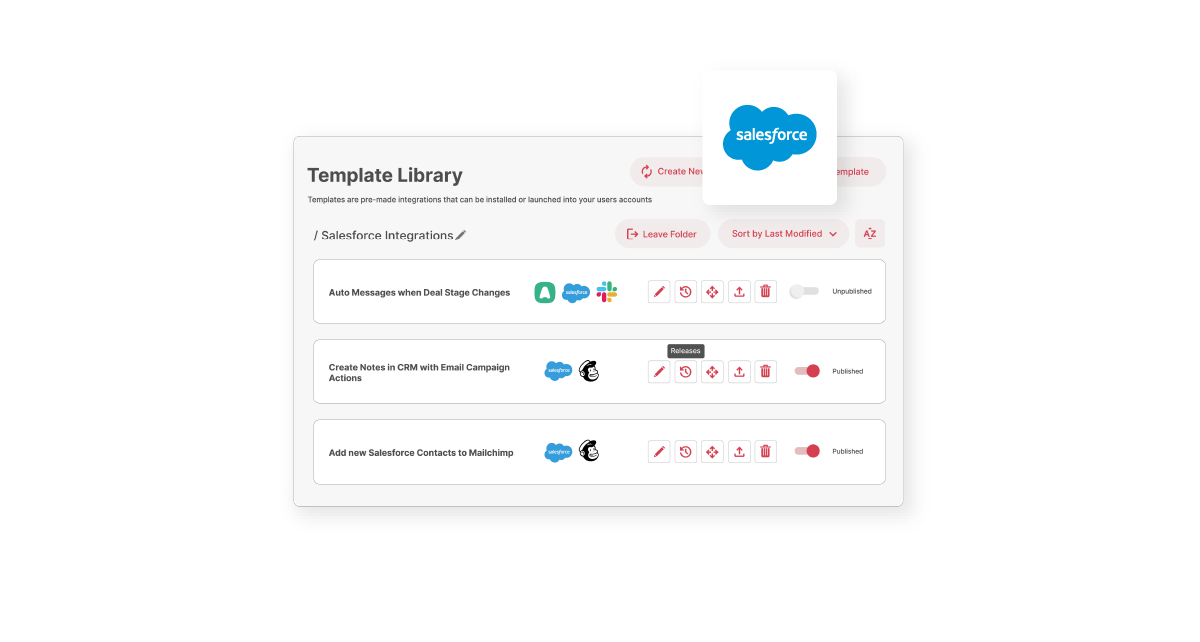
Below is an example of what the Template Library looks like in the embedded iPaaS Cyclr. In this instance it is specifically a template library of Salesforce Integrations dealing with sending messages when a deal stage changes, creating notes in the CRM with email campaign actions from MailChimp, and adding new Salesforce contacts.
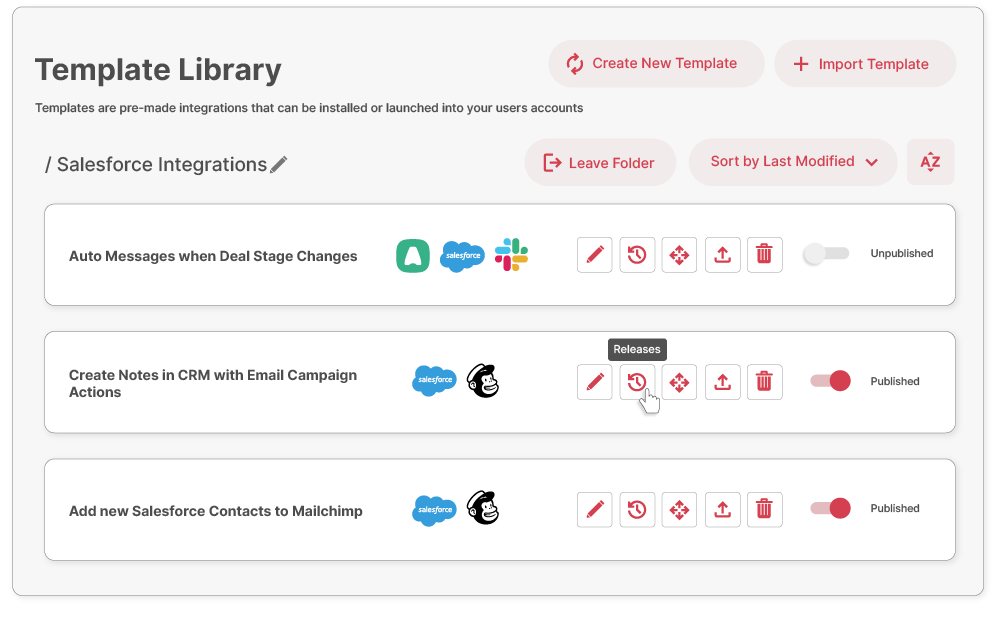
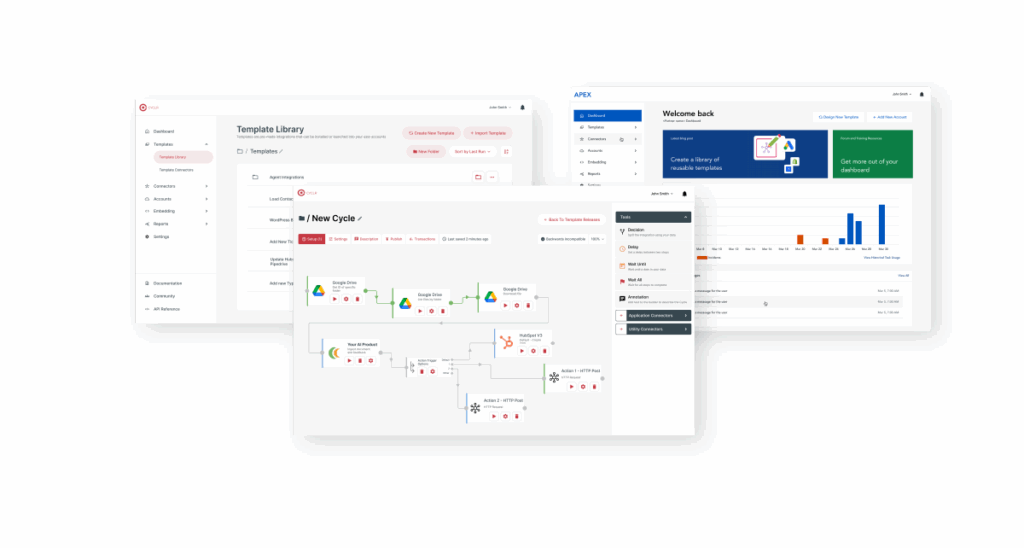
Integration emplates are designed using low-code tools and include predefined workflows that connect various applications via API (application programming interface) connectors. They can be copied, renamed and edited with ease. As well as published and unpublished.
What is field mapping?
Once an integration template is created, it can be customised by end-users through configuration options like mapping fields, setting triggers, and authenticating apps.
Mapping fields is the process of connecting specific pieces of data from one system to the corresponding data points in another. It tells software and systems how to interpret and route information. For instance, linking a ’email’ column in a spreadsheet directly to a ‘Customer email’ field in a database.
Without mapping, systems and software cannot understand each other, which can lead to broken integrations or corrupted data. Therefore, field mapping ensures accurate translation, automation and clean migrations.
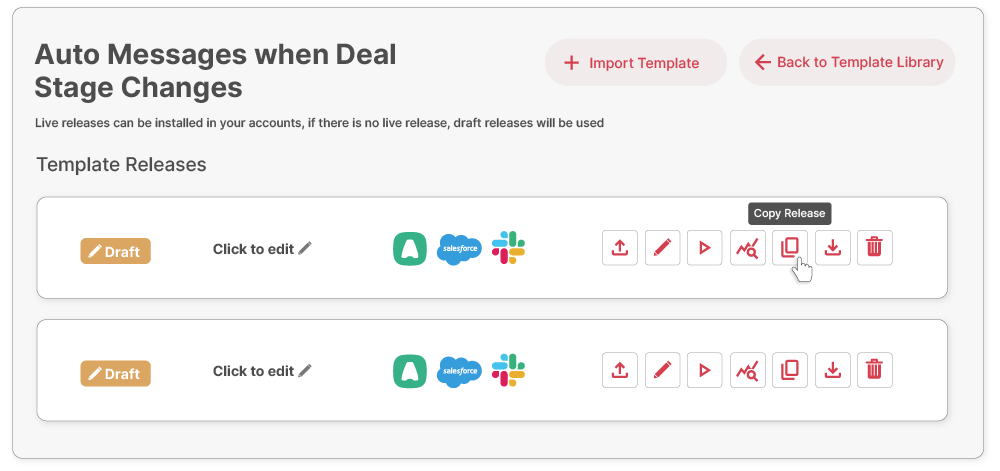
As demonstrated below a user can edit a release of the original integration template, ‘Auto messages when Deal Stage Changes in Salesforce’ to add customisation, mappings and so on.
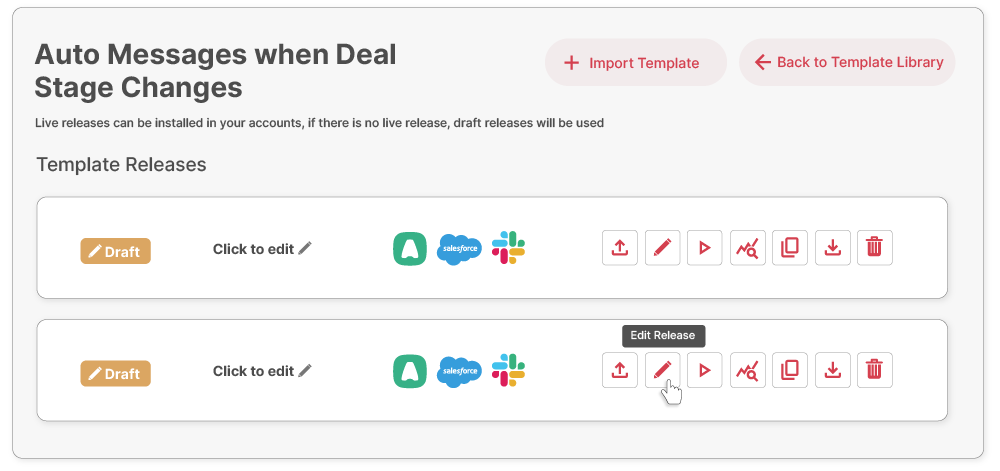
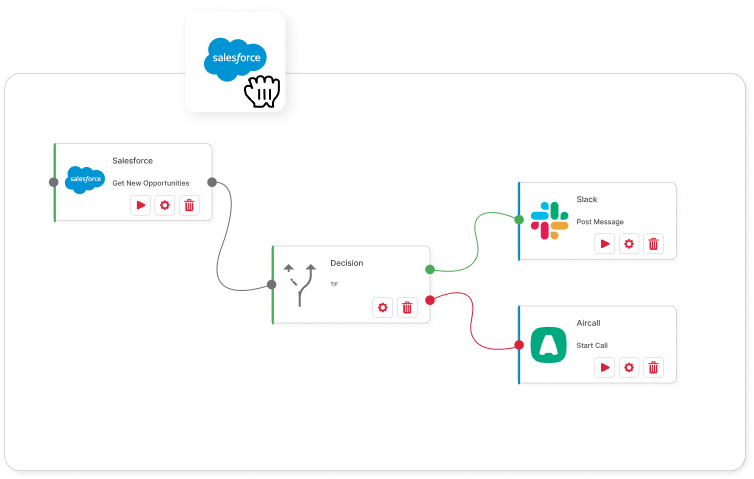
The integration templates allow users to customise integrations based on their specific needs without needing to rebuild the integration from scratch. For instance, the integration template below, syncing new Salesforce opportunities to Slack and Aircall can be adjusted and customised to suit individual needs without changing the original.
What is data splitting?
An integration template can be highly customised and users can handle error management, data splitting, and logging at different steps in the workflow. In integration platforms data splitting refers to the function of pulling data from a single source object and then routing it to multiple related endpoints simultaneously while maintaining and preserving data relationships. For instance, splitting the data across databases, CRMs, etc. without losing context.
The purpose of data splitting allows businesses to break down monolithic data into structured, modular and easy to digest formats. These are tailored for different use cases or applications.
Deploying Integration Templates
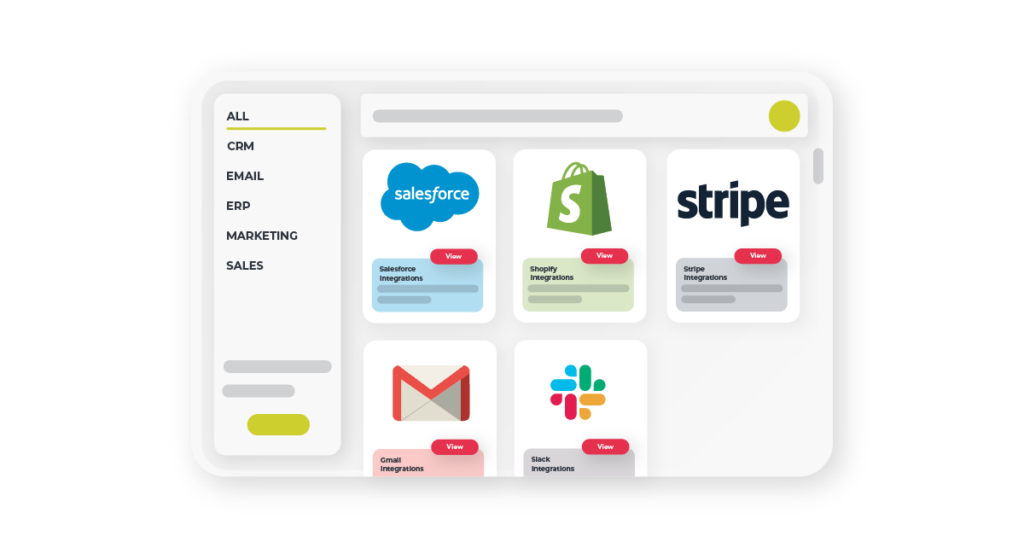
Once an integration template is setup and published it can be deployed for end-users to utilise. Cyclr supports various integration deployment scenarios, such as manual installation by admins or self-service by end-users through a built-in integration marketplace.
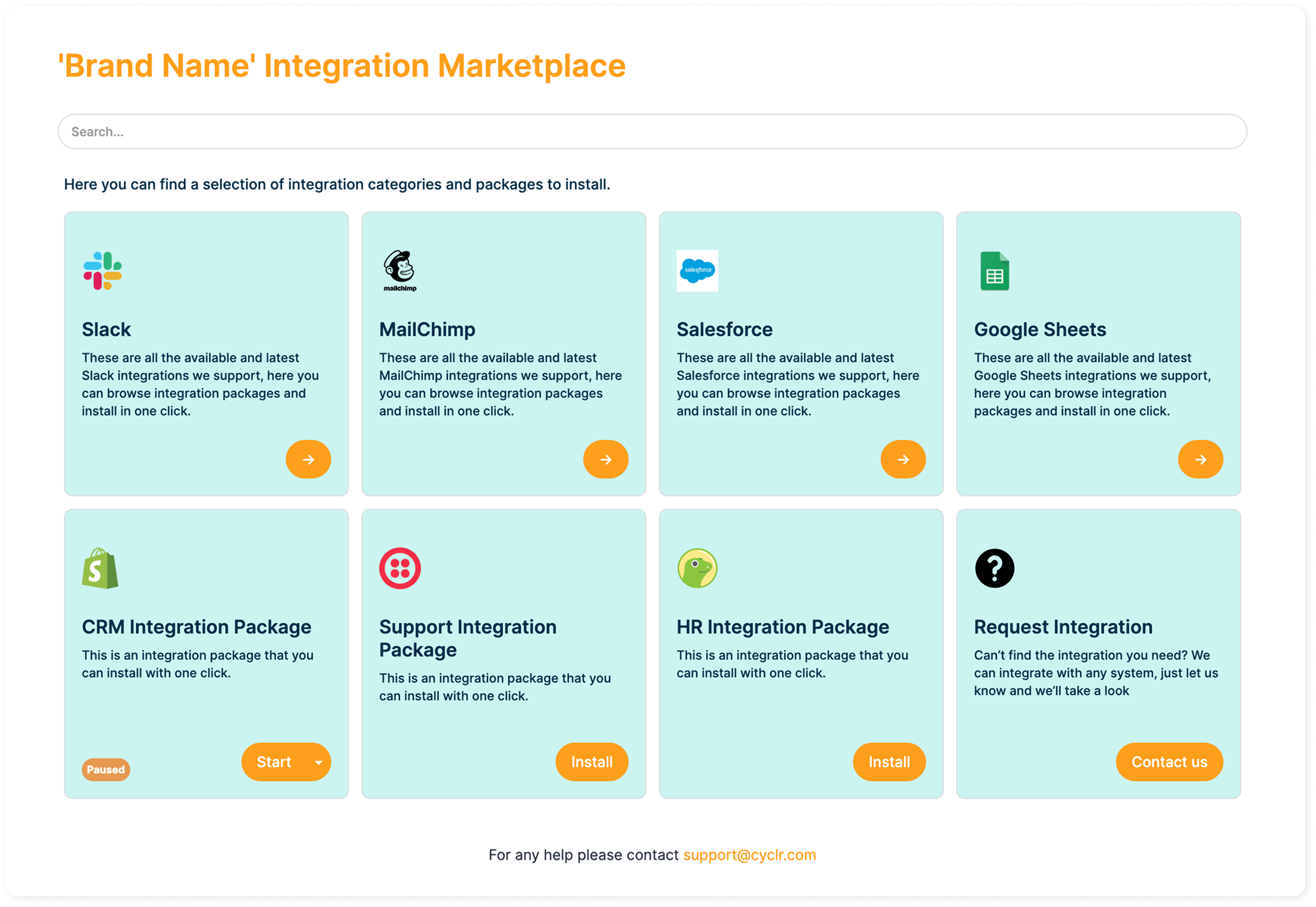
As demonstrated in the image below you can create a bespoke marketplace with your SaaS styling and the available integrations for your end-users to ‘shop’ and install. In our example, you can see pre-built Salesforce integrations are available amongst others for users to install themselves.
This “build once, deploy many times” approach is one of the main reasons our templates are valuable for embedded iPaaS implementations. In short, integration templates allow teams to build once and deploy many times. By standardizing integration logic and simplifying deployment, they help organizations scale their integration offerings while reducing complexity, development effort, and ongoing support requirements.