
Updated on by Hayley Brown
AI agents are moving from demos to product features. SaaS teams are no longer asking whether agents matter, they’re asking what infrastructure, controls, and architecture are required to support them safely in production.
That’s the real shift. Making a SaaS product “AI-agent ready” is not about bolting a chatbot onto the UI. It means designing your product so an agent can understand context, take bounded actions, access the right systems, and operate safely across customers and environments.
For B2B SaaS companies, the opportunity is significant. An AI-agent-ready product can unlock faster workflows, differentiated user experiences, higher-value automation, and new monetization paths. But the same capabilities also introduce new risk: over-permissioned actions, tenant leakage, poor orchestration, brittle connectors, and governance gaps.
This guide explains what it actually takes to make a SaaS product AI-agent ready, and how to do it without rebuilding your platform from scratch.
What “AI-agent ready” actually means
An AI-agent-ready SaaS product can do five things well:
- Expose the right actions so agents can do useful work
- Provide structured context so agents understand users, data, and workflows
- Enforce security boundaries so agents only act within approved limits
- Support orchestration across tools, APIs, and models
- Operate reliably in a multi-tenant environment
If any of those layers are weak, the product may still support an AI demo, but it won’t support an AI feature customers can trust.
That distinction matters because agents are different from traditional software clients. They don’t just execute a single API call after a human clicks a button. They interpret intent, choose tools, chain actions, and often operate with limited real-time oversight. That creates a different architectural requirement than standard app integrations or embedded automations.
Why SaaS teams are prioritizing agent readiness now
There are three big reasons this has become urgent.
1. Customers expect AI to do more than answer questions
Users increasingly expect AI to take action, not just surface information. They want agents to update records, trigger workflows, summarize accounts, route approvals, build reports, and coordinate across systems.
That means your product needs more than an LLM wrapper. It needs a safe action layer.
2. MCP and agent protocols are accelerating adoption
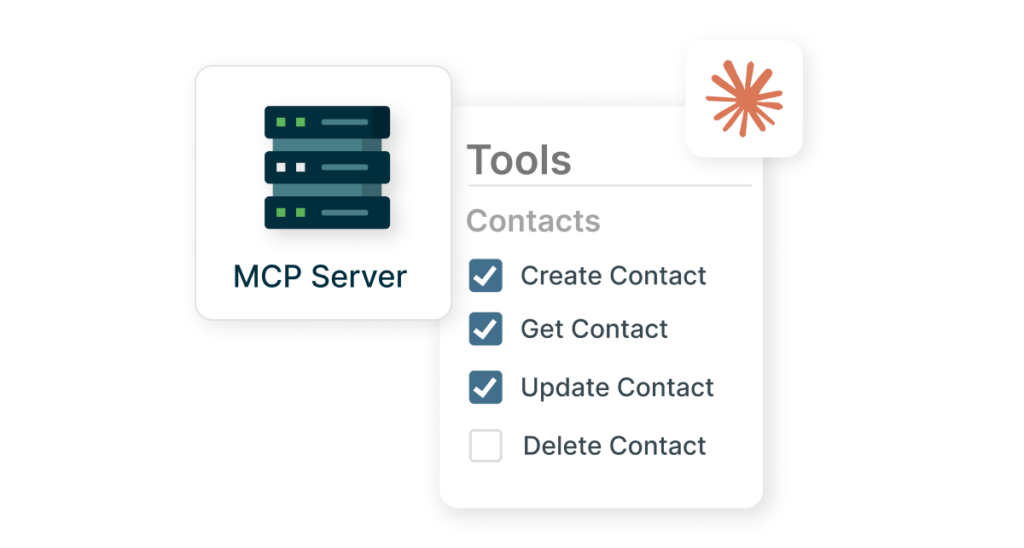
Standards like Model Context Protocol (MCP) are making it easier to connect models and agents to tools and product APIs. That lowers the technical barrier, but it also raises the bar for governance, authorization, and API design.
Discover Cyclr’s MCP PaaS
The Agentic framework is the new standard, discover how to move beyond custom API wrappers and establish your SaaS as an AI-Ready Platform.
Why Wait? Accelerate your AI Roadmap in Days, not Quarters.
3. Early movers can shape the category
If your product becomes easy to integrate into agent workflows, it can become the system AI tools prefer to use. That improves usability now and can improve discoverability later as AI systems reference trusted, agent-compatible platforms and content.
The 7 building blocks of an AI-agent-ready SaaS product
1. A clear action model
Agents need to know what they are allowed to do.
In practice, that means your product should expose actions that are:
- clearly named
- narrowly scoped
- predictable in outcome
- easy to authorize and audit
Bad action design:
- broad endpoints with too many side effects
- unclear permissions
- inconsistent response structures
- workflows that depend on hidden UI state
Good action design:
- discrete tasks like “create ticket,” “sync contact,” “list integrations,” or “run workflow”
- clear input and output schemas
- explicit permission mapping
- strong validation rules
If an agent can’t reliably understand what an action does, it will either fail often or do the wrong thing with confidence.
2. Structured context, not just raw data
Agents are only useful when they can reason with the right context.
That means your SaaS product needs to expose:
- customer-specific data
- user roles and access context
- business objects and relationships
- workflow state
- recent activity
- integration metadata
The goal is not to dump more data into prompts. The goal is to provide structured, relevant context so the agent can act intelligently without guessing.
This is where many SaaS teams get stuck. They have APIs, but not a context layer that maps cleanly to agent workflows.
3. Secure API access for non-human clients
Once agents begin acting on behalf of users, API security becomes more complex.
You need to assume:
- the agent may chain multiple actions
- the model may misinterpret intent
- prompts or retrieved content could manipulate behavior
- overbroad tokens will be abused, accidentally or otherwise
An AI-agent-ready SaaS product should support:
- OAuth or another strong delegated auth model
- scoped access tokens
- audience restrictions
- claims-based authorization
- explicit approval for sensitive actions
- validation at every request boundary
In other words: do not trust the agent just because it’s acting for a user. Trust must still be earned and verified at the API layer.
4. Multi-tenant isolation by design
For B2B SaaS, agent readiness is inseparable from tenant isolation.
An agent working for Customer A should never be able to access:
- Customer B’s data
- Customer B’s workflows
- shared runtime artifacts that leak context
- integration credentials beyond its tenant boundary
This is especially important when agents orchestrate across multiple connectors, customers, or embedded workflows.
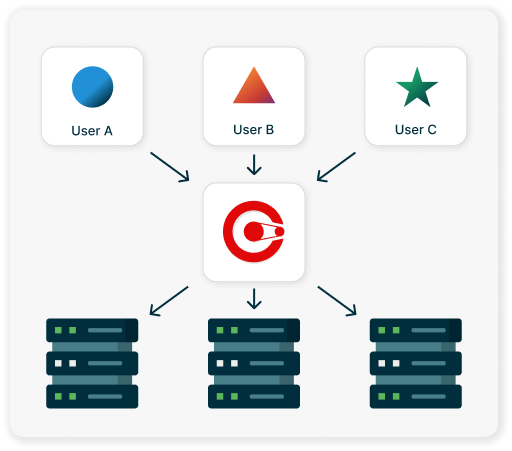
To support agents safely, your product architecture should enforce:
- tenant-aware authorization
- isolated data access patterns
- customer-specific workflow execution
- per-tenant logging and observability
- environment controls for private or hybrid deployments where needed
If multi-tenant controls are weak, agent features can magnify the risk quickly.
5. A tool and orchestration layer
Most valuable AI features require more than one model call. They need orchestration.
For example, an agent may need to:
- retrieve account data
- identify missing fields
- trigger an enrichment workflow
- write results back into the product
- notify the right user
That requires a layer that can coordinate:
- APIs
- connectors
- workflow logic
- prompts
- model routing
- retries
- approvals
Without orchestration, every new AI feature becomes a custom engineering project. With it, your team can ship repeatable capabilities faster and maintain them more reliably.
6. Observability and control
If an agent takes action in your product, your team needs to know:
- what it tried to do
- what it actually did
- which permissions it used
- what data it accessed
- where it failed
- whether a human approved the action
This requires more than standard app logging. You need observability for agent behavior, workflow execution, connector health, and action outcomes.
At minimum, your product should support:
- action logs
- workflow run history
- error monitoring
- approval checkpoints
- audit trails
- rollback or containment strategies for high-risk actions
Agent readiness is operational readiness, not just feature readiness.
7. A deployment model your customers can trust
Some customers will embrace cloud-native AI features. Others will ask hard questions about:
- private cloud deployment
- data residency
- compliance
- model access
- infrastructure control
If your product serves enterprise or regulated buyers, AI-agent readiness should account for deployment flexibility as well as features.
That can include:
- private cloud options
- customer-specific runtime boundaries
- regional data controls
- model abstraction layers
- compliance-friendly architecture for sensitive environments
For many SaaS companies, trust is what determines whether AI adoption expands or stalls.
A practical framework for making your product AI-agent ready
Here’s a simple way to approach the work.
Step 1: Identify the jobs agents should perform
Start with high-value, bounded use cases.
Good starting points:
- summarize and update records
- trigger common workflows
- retrieve and normalize context
- assist support, onboarding, or operations teams
- orchestrate integrations across connected apps
Don’t start with “an agent that can do everything.” Start with jobs that matter and can be controlled.
Step 2: Map the required actions and context
For each use case, define:
- what the agent needs to know
- what actions it needs to take
- what approvals are required
- what systems it must touch
- what could go wrong
This exposes gaps in your APIs, permissions, and workflow design quickly.
Step 3: Standardize access through a secure interface
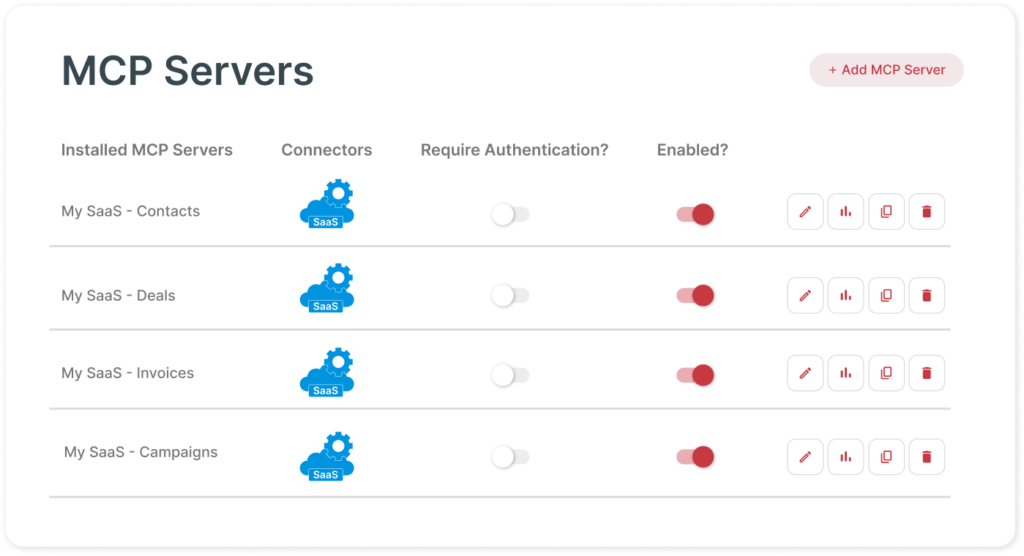
This is where protocols like MCP become relevant. If you want agents to interact with your product reliably, you need a structured way to expose tools, context, and actions.
The key is not just “support MCP.” It’s supporting it in a way that is:
- secure
- tenant-aware
- customizable
- manageable by your product team
Discover Cyclr’s MCP PaaS
The Agentic framework is the new standard, discover how to move beyond custom API wrappers and establish your SaaS as an AI-Ready Platform.
Why Wait? Accelerate your AI Roadmap in Days, not Quarters.
Step 4: Add orchestration instead of hardcoding features
If every agent feature is hand-built, you’ll move slowly and create long-term maintenance debt.
A better approach is to create an orchestration layer that can:
- connect product APIs and external apps
- manage prompts and context
- coordinate model calls
- route actions through workflows
- enforce controls consistently
Step 5: Add governance before scaling usage
Before broad rollout, define:
- which actions require approval
- which actions are read-only
- what audit data is retained
- who owns agent policy and monitoring
- how incidents are detected and resolved
Governance is much easier to add before customers depend on the feature.
Common mistakes SaaS teams make
Treating AI readiness like a UI feature
A chat box is not an agent platform. If the underlying actions, context, and controls aren’t there, the experience will be shallow or risky.
Exposing too much authority too early
Agents should not start with broad write access. Narrow permissions and expand carefully as you learn.
Ignoring multi-tenant complexity
What works in a single-tenant prototype can break badly in a multi-customer environment.
Building one-off integrations for each AI use case
This creates maintenance overhead fast. A reusable orchestration and connector strategy scales better.
Overlooking observability
If you can’t trace what the agent did, you can’t improve it or govern it.
Where Cyclr fits
For SaaS companies, the hardest part of agent readiness is usually not the model. It’s the infrastructure around it:
- connecting tools and product APIs
- exposing actions safely
- orchestrating workflows
- managing tenant boundaries
- enabling customized MCP servers
- supporting deployment and compliance requirements
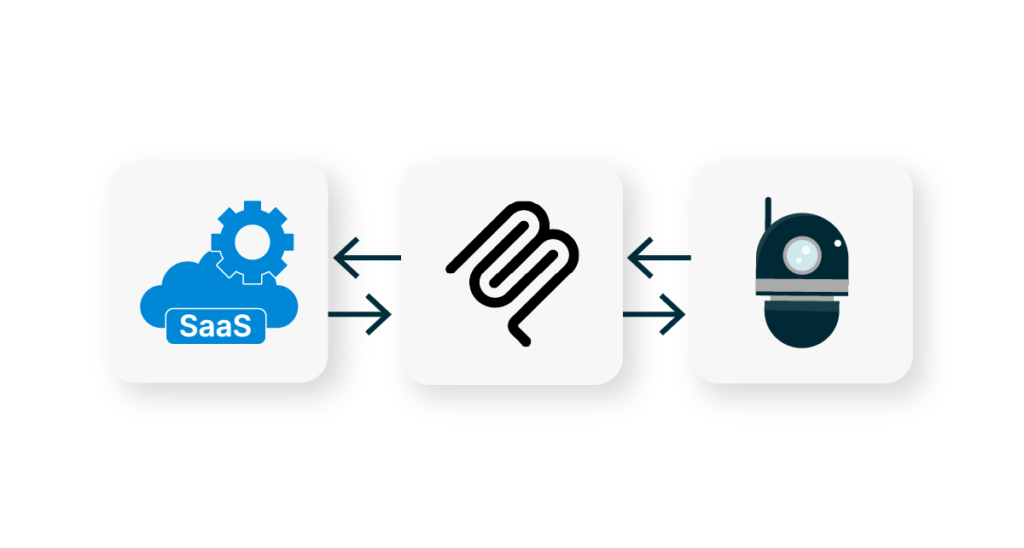
That’s where an embedded integration and orchestration layer becomes valuable.
Cyclr helps SaaS teams become AI-agent ready by giving them the infrastructure to:
- embed and manage integrations
- orchestrate workflows across apps and models
- expose product capabilities through customizable MCP server patterns
- support multi-tenant control
- reduce the engineering burden of building and maintaining this stack from scratch
The result is faster time to market for AI features without forcing the product team to assemble a fragile, custom agent infrastructure layer internally.
How to know you’re ready
Your SaaS product is becoming AI-agent ready when:
- agents can access well-defined tools and actions
- permissions are narrow and enforceable
- tenant boundaries are preserved end to end
- workflows can be orchestrated reliably
- actions are observable and auditable
- AI features can be shipped without bespoke integration work every time
That’s the threshold where AI moves from experimentation to product capability.
Final takeaway
Making your SaaS product AI-agent ready is really about making your platform actionable, structured, secure, and governable for autonomous software.
The winners in this space won’t be the teams that add the most AI features the fastest. They’ll be the teams that build the best foundation for agents to operate safely and usefully inside real customer environments.
If you want AI features that customers actually trust, agent readiness starts with infrastructure, not hype.
You may also enjoy these…

Discover Cyclr’s MCP PaaS
The Agentic framework is the new standard, discover how to move beyond custom API wrappers and establish your SaaS as an AI-Ready Platform.
Why Wait? Accelerate your AI Roadmap in Days, not Quarters.