Updated: | Originally published: | By Hayley Brown
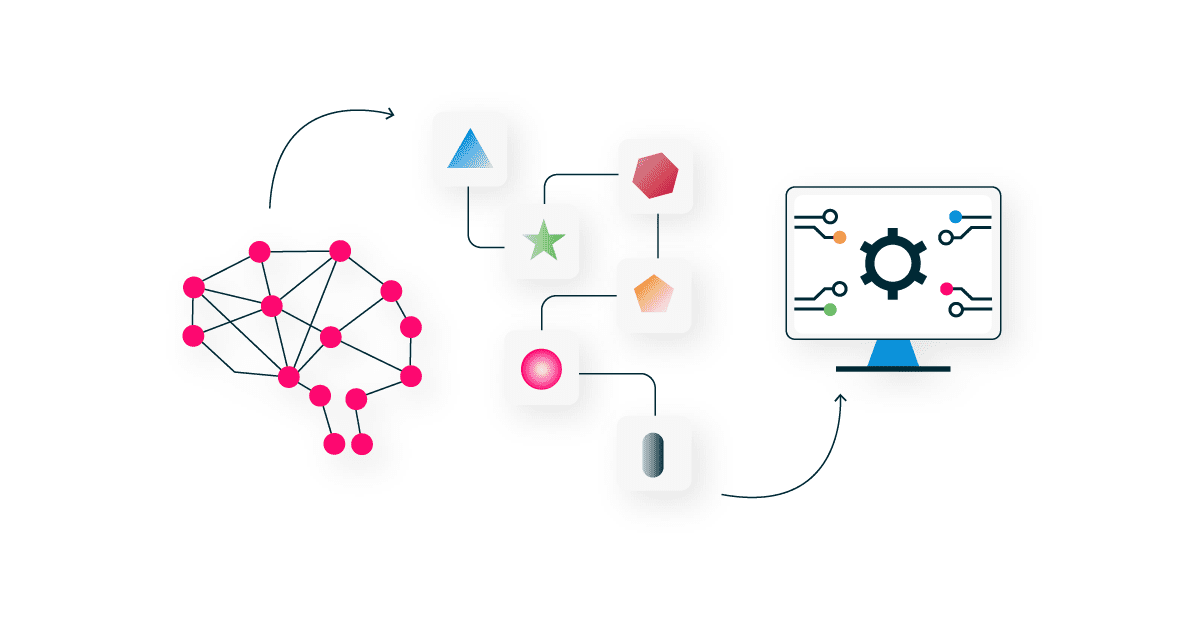
True digital transformation happens when the three pillars of the modern tech stack converge into a single synergetic engine.
The Brain (AI – Artificial Intelligence): The reasoning layer that interprets intent and makes complex decisions based on high-level goals.
Connective Tissue (iPaaS – integration Platform as a Service): Core infrastructure that bridges data between thousands of applications securely and reliably.
Common Language (MCP – Model Content Protocol): The protocol that allows the Brain (AI) to understand how to use the Connective Tissue (iPaaS) effectively.
Individually, each of these components is powerful. Together, they form something fundamentally different: a system that doesn’t just process work, but understands and executes it.
Intelligence Isn’t Just Thinking, It’s Acting
For years, enterprises have invested heavily in integration and automation. APIs were built, workflows orchestrated, and data pipelines optimized. But these systems, while efficient, remained fundamentally reactive. They required explicit instructions, predefined logic, and human oversight at every meaningful decision point.
Then came AI.
Suddenly, systems could interpret intent. They could summarize, predict, recommend, and even reason. But there was a catch: intelligence without action is inert.
An AI that cannot access systems, move data, or trigger workflows is like a brain in isolation capable of thought, but unable to influence the world.
The Rise of the Digital Nervous System
This is where iPaaS or embedded iPaaS becomes indispensable.
Integration platforms have quietly evolved into the connective tissue of the enterprise. They link CRMs, ERPs, support tools, databases, and custom applications into a cohesive whole. They enforce governance, ensure security, and provide the pathways through which data flows.
But traditionally, iPaaS has been configured, not understood.
Workflows are built manually. Logic is encoded explicitly. Every new use case requires engineering effort.
What’s been missing is a way for intelligence to dynamically use this infrastructure.
Enter MCP: Giving AI a Way to Operate
The Model Context Protocol (MCP) changes the equation.
MCP acts as a shared language between AI systems and the tools they need to operate. Instead of hardcoding integrations or building bespoke connectors for every use case, MCP standardizes how capabilities are exposed and discovered.
It answers critical questions like:
- What actions are available?
- What data can be accessed?
- How should a task be executed safely?
With MCP, the AI doesn’t just generate ideas it understands how to do things within real systems.
Discover Cyclr’s MCP PaaS
The Agentic framework is the new standard, discover how to move beyond custom API wrappers and establish your SaaS as an AI-Ready Platform.
Why Wait? Accelerate your AI Roadmap in Days, not Quarters.
From Automation to Autonomy
When these three layers come together, we move beyond automation into something closer to autonomy.
- AI provides intent and reasoning
- iPaaS provides reach and execution
- MCP provides understanding and coordination
This convergence enables a new class of systems:
- Assistants that don’t just suggest actions, but complete them
- Workflows that adapt in real time instead of following rigid paths
- Enterprises that can respond dynamically to changing conditions
Instead of stitching together point solutions, organizations can build adaptive, intelligent systems that continuously evolve.
The Shift in How We Build
This architecture also changes how software is designed.
In the past, developers had to anticipate every edge case and encode it into workflows. Now, they can focus on exposing capabilities making systems legible to AI through MCP, while relying on intelligence to orchestrate them dynamically.
This leads to:
- Faster development cycles
- Reduced maintenance overhead
- Greater flexibility in how systems are used
In essence, we move from programming behavior to enabling capability.
The Organizations That Win
The companies that will lead this next wave aren’t just adopting AI. They’re rethinking their architecture around it.
They are:
- Treating integration as a strategic asset, not a backend concern
- Standardizing how systems expose functionality
- Designing for AI-native interaction from the ground up
Because the real advantage isn’t having smarter models it’s having systems those models can actually use.
Discover Cyclr’s Embedded iPaaS and MCP PaaS
Like what you’re reading so far and fancy seeing our software in action yourself?
Our integration experts can take you through the platform and answer any and all of your questions, just book a demo today!
Final Thought: Intelligence is an Ecosystem
A brain alone is not intelligence. It needs a body, a nervous system, and a shared language to function.
The same is true in technology.
AI, iPaaS, and MCP are not competing paradigms they are interdependent layers of a single system. When aligned, they transform software from a collection of tools into a cohesive, intelligent organism.
That’s the anatomy of intelligence.


