15th June 2026
AI in Integrations: Why SaaS Leaders Still Need Deterministic Workflows
AI is reshaping how software companies think about automation, user experience, and… Read Article
As an established SaaS platform you likely already have an integration strategy in place. Most likely you have self-created your most valuable integrations in-house and drawn a line at ‘X’ integrations whereby your end-user is pointed to your API or an off-platform integration solution.
Managing an eco-system of native integrations, whilst beneficial to the end-user, can be time consumptive for development teams. Moreover you risk having dozens of custom ‘bridges’, all built slightly different from one to the other.
Replace fragile, custom-coded API scripts with standardized visual orchestration. Reduce tech debt and eliminate single-developer dependencies when APIs break or update.
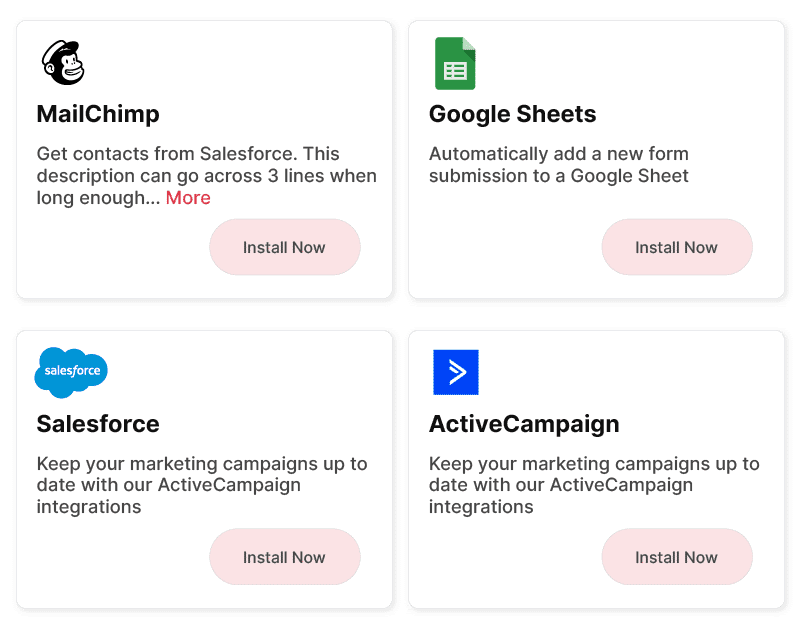
This is where Cyclr can help you to boost your integration coverage while cutting your development and maintenance costs. Alongside your existing strategy, you will be able to deliver more native, custom branded, integrations in a standardised form.
You can also take integration outside of the development team and empower your customer success/product teams with a drag and drop integration builder. Integration can be overseen by development but deployed by commercial. Responding to, and delivering, integration request can become a shared task.

Select which applications you want to connect your application to, from a library of over 600+ ready made connectors

Build your integrations by orchestrating data between applications using our low-code, visual integration builder
Publish your integrations directly inside your application, so your users can self-serve without leaving your SaaS platform
Enterprise SaaS customers no longer just want basic data syncs—they demand headless flexibility, AI agent interoperability, and non-negotiable data governance. Cyclr equips established platforms with the infrastructure required to support modern API standards and agentic workflows without rebuilding your core backend.
As AI agents (like Claude and ChatGPT) become the new primary interface for software interaction, established SaaS platforms must expose their capabilities to AI tools safely. Cyclr’s MCP PaaS converts your REST APIs and integration workflows into standardized, secure MCP servers. Enable AI agents to perform complex multi-app actions on behalf of your users with enterprise-grade safeguards.

Introduction to iPaaS, Embedded iPaaS and Integration
Three ways: Amplification (600+ out of the box integrations), Standardization (all integrations treated equally) and Reduction in Engineering Overhead (sophisticated toolkit with pre-built components).

Integrate your application with 600+ SaaS application connectors to rapidly scale your connectivity options.
Visual integrations standardise the building process, making it easier for team collaboration.
Pre-built components and a low-code environment enables wider teams to get involved in integration building and maintenance task.
Yes, we encourage it. Our approach to native integration complements your existing approach. Cyclr can sit behind your existing UI, so your latest Cyclr integrations can be automatically added to your platform alongside any you already have.
It is not just building the integrations that takes time, it is also the management and customisation that can be a drain. APIs change and integrations have to be updated, which is why Cyclr centrally maintains all connectors, so you don’t have to. Mass-customisation of integrations for end-users is now also possible, as is deploying individually customised integrations.
Absolutely. Providing integrations in-app maintains your relationship with your user and gives a much better experience. Many of our customers opt to move pre-built external integrations onto Cyclr, whilst also connecting their platform to new services to widen their reach.
Cyclr sits seamlessly behind your application’s user interface using a hybrid co-existence model. Your existing in-house integrations remain unaffected while new Cyclr-powered connectors appear natively alongside them in your application’s integration marketplace.
Yes. Because Cyclr operates in a hybrid co-existence model, you can migrate legacy integrations incrementally. You can keep existing custom bridges running while building and testing new versions in Cyclr. Once ready, you simply switch the endpoint routing inside your UI without impacting active customer workflows or experiencing service interruption.
Cyclr includes specialized logic controls, such as Cross Updating Preventers (XUP) and deduplication filters, directly within the visual orchestration engine. These features prevent infinite loops when bi-directional syncs are active between your SaaS platform and third-party systems like Salesforce or HubSpot, protecting your API rate limits and data integrity.
15th June 2026
AI is reshaping how software companies think about automation, user experience, and… Read Article
5th January 2026
File Transfer Protocol (FTP) is one of the oldest and most widely… Read Article
15th December 2025
Many integrations keep two systems aligned by sending updates from one to… Read Article