Updated: | Originally published: | By Nic Butler
Everyone is talking about MCP right now. But simply exposing tools to AI agents isn’t what makes an MCP platform effective.
The real challenge is this: can an LLM actually understand your tools well enough to use them reliably?
That’s where Cyclr has an edge.
Cyclr’s MCP PaaS doesn’t start from scratch. It’s built on top of years of connector development, method design, and human-readable metadata. That means when customers publish MCP servers through Cyclr, they’re not just exposing raw API operations to Claude or ChatGPT, they’re exposing well-described, well-structured tools that AI models can already interpret and use.
In other words, the secret sauce isn’t just the MCP wrapper. It’s the quality of the underlying connector definitions.
MCP only works well when the tools are understandable
At a high level, the flow is simple.
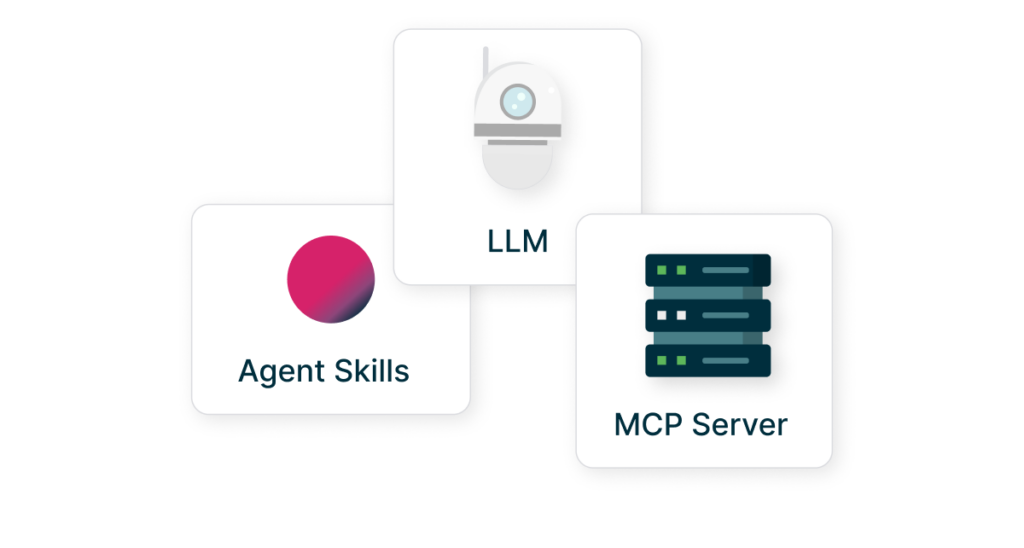
A user types a prompt into an MCP client like Claude or ChatGPT. That client sends the user’s prompt, along with the available tool definitions from the installed MCP server, to the LLM. The model then decides whether it can answer directly or whether it should call a tool.
If it chooses a tool, the MCP client makes the call to the MCP server, which then executes the action against the underlying API.
That sounds straightforward. But there’s a catch.
LLMs don’t “understand” APIs the way developers do. They rely on the text they’re given: tool names, method titles, descriptions, parameter names, parameter help text, and hints about what each tool does.
If that metadata is vague, inconsistent, or incomplete, the LLM has to guess. And when it guesses, tool use becomes unreliable.
Cyclr’s advantage: a huge library of AI-readable tool definitions
Cyclr has been building connectors for human users for years.
That means every connector method already comes with the kind of information a person would need to use it successfully:
- method names
- descriptions
- parameter names
- parameter descriptions
- usage hints
- expected response formats
- contextual notes in documentation
It turns out this is also exactly what LLMs need.
When Cyclr turns connector methods into MCP tools, most of that metadata can be passed through directly. There’s no need for customers to manually rewrite tool definitions for AI consumption. The same plain-English descriptions that help a human configure a connector also help an LLM choose the right tool and use it correctly.
That creates a major structural advantage.
Cyclr doesn’t just offer a handful of AI-ready functions. It effectively brings forward a large existing library of tools, built over time, with rich descriptive context already attached. With hundreds of connectors and tens of thousands of methods, that represents a huge body of usable tool intelligence.

Why this matters in practice
This is why Cyclr’s MCP PaaS can feel effective straight away.
Instead of forcing customers to handcraft descriptions for every endpoint, Cyclr starts with tool definitions that are already meaningful. In many cases, the LLM can identify the right tool, understand what inputs it needs, and call it successfully out of the box.
That reduces friction in two important ways:
1. Faster time to value
Customers can publish MCP servers without first doing a separate AI enablement project across every method.
2. Better tool selection by the LLM
Verbose, well-written descriptions help the model distinguish between similar tools and even spot hints such as “use this other method if you need X instead.”
That second point is especially important. Good metadata doesn’t just describe a tool. It helps the model reason about the broader toolset.
The metadata layer is the real moat
A lot of MCP discussion focuses on infrastructure: servers, protocols, clients, authentication, transport.
Those things matter. But they are not enough.
If every vendor can expose an API through MCP, then the real differentiator becomes how usable those tools are once they reach the model.
Cyclr’s moat is that its connector ecosystem was already built with rich, human-readable operational detail. That investment now compounds in the AI era.
What would take another vendor a major retrofit project going back through a large tool library and manually enriching every definition for agent use is largely already present in Cyclr.
That’s a serious advantage because tool quality scales AI usefulness.
There’s a second layer to this: API design matters too
There’s another lesson here.
Even if an LLM can understand a tool perfectly, it still depends on the efficiency of the underlying API.
Imagine asking an AI assistant:
“Get me all incidents across my accounts from the last 24 hours and give me a synopsis of what’s happening and how to mitigate it.”
That’s a very reasonable request. But depending on how the API is structured, fulfilling it may require the MCP client and server to make hundreds or even thousands of calls:
- fetch accounts
- iterate over each account
- fetch incidents per account
- fetch error details
- aggregate results
- send everything back to the model for interpretation
For a traditional application, that may be acceptable. APIs were designed for machines to make lots of cheap, fast requests.
For an LLM workflow, it’s a different story.
Every extra tool call adds latency, complexity, and token cost. What is trivial for software can become expensive and slow for an agentic workflow.
So while Cyclr already has an advantage in tool definitions, the next frontier is making APIs themselves more agent-friendly.
Agentic workflows need APIs designed for summarization, not just iteration
To make MCP more efficient, APIs need to support higher-level outcomes.
Instead of forcing an agent to retrieve and assemble data one piece at a time, the API should expose endpoints that reduce unnecessary iteration. For example:
- return account summaries with incident counts already included
- provide incident summary endpoints instead of raw event-by-event extraction
- expose compact, structured responses that give the LLM only what it needs
This doesn’t mean building one-off endpoints for every customer request. That would create another kind of sprawl.
It means recognizing that agentic use introduces a new design pressure. APIs are no longer used only by developers and applications. They’re increasingly being used by AI systems that benefit from concise, semantically meaningful responses.
The more intuitive and compact the API, the more effective the MCP server built on top of it becomes.
The bigger takeaway
Cyclr’s MCP PaaS works because it starts from a stronger foundation than most.
It combines:
- a mature connector library
- rich method and parameter metadata
- human-readable definitions that also work for LLMs
- an architecture that can publish those methods as MCP tools quickly
- a growing understanding of how APIs need to evolve for agentic efficiency
That combination matters.
Anyone can expose tools. Fewer companies can expose tools that an LLM can use well on day one. And fewer still have the metadata depth and connector coverage to do that at scale.
That’s the difference between offering MCP as a checkbox and delivering MCP as a practical platform.
Discover Cyclr’s Embedded iPaaS
As AI becomes central to modern SaaS, the real differentiator won’t be the model, it will be the infrastructure that connects it to the rest of your ecosystem.
Cyclr’s embedded iPaaS gives you the tools to securely orchestrate data, manage integrations at scale, and empower AI features with the context they need to deliver real value.
Conclusion
The secret sauce behind Cyclr’s MCP PaaS is not just that it can turn APIs into MCP servers.
It’s that Cyclr already spent years building the connective tissue that makes those tools understandable: the descriptions, parameter guidance, method definitions, and contextual hints that both humans and LLMs rely on.
That gives customers a head start in the agentic world.
And as API design evolves to support more efficient AI-native workflows, that advantage gets even stronger.
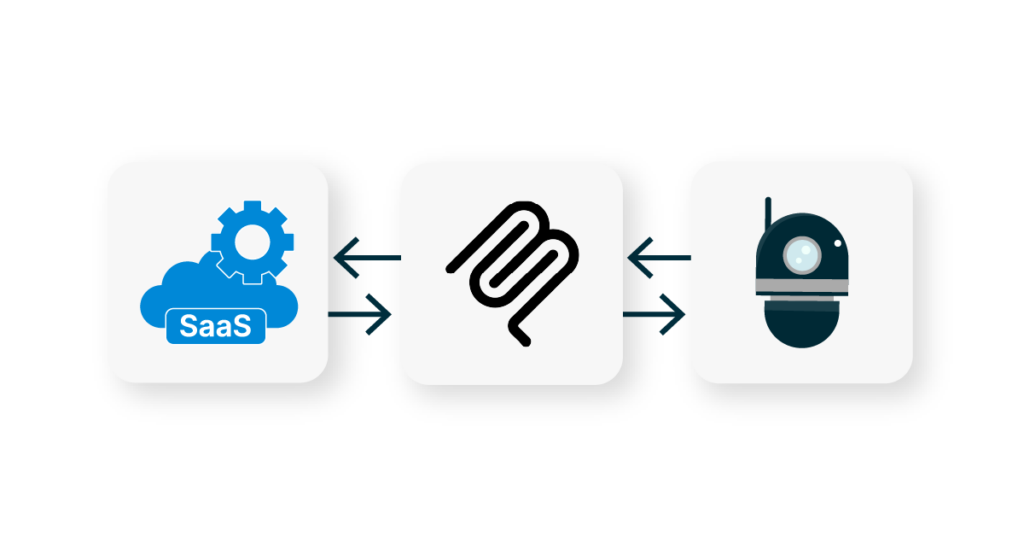
Discover the secret behind Cyclr’s MCP PaaS and how it helps SaaS companies build secure, scalable, multi-tenant AI interoperability without the infrastructure burden.