Updated: | Originally published: | By Susanna Fagerholm
In 2026, customer-facing integrations are no longer optional add-ons. Instead, they are core buying criteria and primary retention drivers for B2B software. According to industry analysis by Gartner, the integration platform as a service (iPaaS) market has grown past $10 billion as companies connect hundreds of cloud apps.
To meet this scaling demand, the global iPaaS market continues to grow rapidly, with embedded iPaaS leading the way. As a result, software teams are moving away from custom, in-house API code and adopting ready-made integration platforms to avoid heavy engineering debt.
However, choosing the wrong SaaS integration platform carries severe risks. For example, Gartner research into software buying trends shows that 60% of software buyers regret their purchase due to hidden costs and complex setup. To help CTOs, VPs of Product and lead engineers avoid these pitfalls, we put together a clear checklist to evaluate security, multi-tenancy and developer tools.
What is an embedded iPaaS?
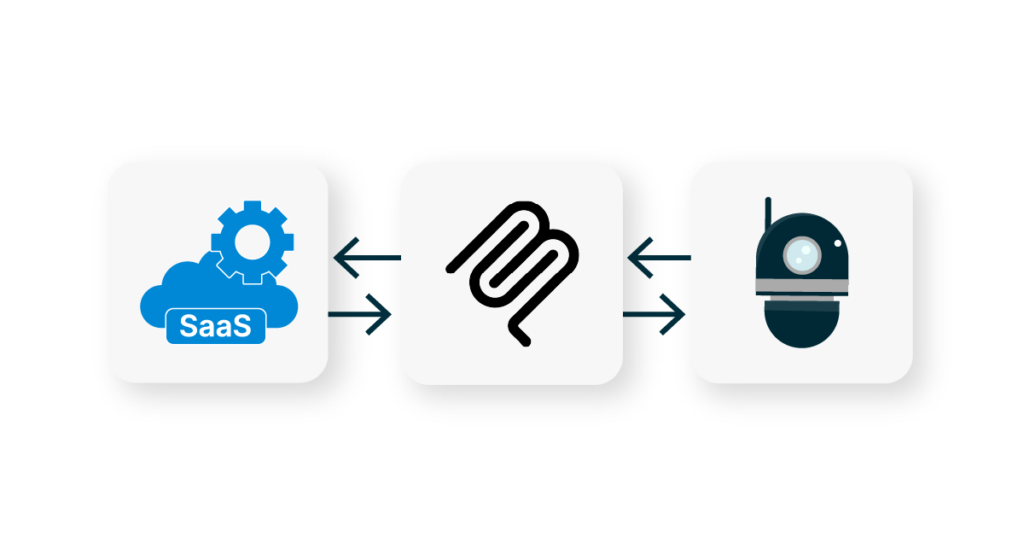
An embedded iPaaS (Integration Platform as a Service) is a white-labeled platform that lets SaaS companies build, ship and manage native integrations inside their own product.
Unlike an internal iPaaS that helps corporate IT teams connect back-office tools behind a firewall, an embedded iPaaS helps SaaS teams expand their own product. As a result, it runs workflows across thousands of separate customer accounts (tenants) at the same time, which demands a different approach to security, user isolation and AI connectivity.
Five-point embedded iPaaS vendor evaluation checklist

When comparing embedded iPaaS vendors, SaaS teams should evaluate platforms across five core areas.
1. Audit infrastructure-layer multi-tenancy (25% weight)
The main difference between an internal IT iPaaS and an embedded platform is how it handles multi-tenancy. Above all, the platform must enforce isolation at the infrastructure layer rather than through basic app code.
Application-layer isolation, where a vendor uses shared database tables and shared runtimes, carries high risk. For instance, a single code bug could expose one customer’s data in another customer’s logs. In contrast, true infrastructure-layer isolation runs each workflow in its own temporary container with zero shared memory.
Furthermore, the platform must encrypt credentials with tenant-specific keys (KMS) and separate logs at the storage layer to prevent noisy-neighbor slowdowns when one busy account spikes in traffic.
2. Verify enterprise security and credential vaulting (25% weight)
Third-party vendor risk becomes a SaaS company’s direct responsibility in an embedded setup. In fact, the Verizon Data Breach Investigations Report (DBIR) highlights that third-party vulnerabilities and supply chain risks remain top causes of security breaches.
Therefore, enterprise security teams should require three things:
- Security audits: Require a current SOC 2 Type II report that covers the vendor’s embedded engine and token vault, not just their office systems.
- Automated token management: Make sure the platform handles OAuth 2.0/2.1 PKCE checks and background token refreshes automatically.
- Flexible hosting: In regulated industries, strict enterprise contracts often block public cloud processing. Consequently, platforms like Cyclr offer flexible deployment options, letting you run the platform in a managed cloud or inside a private Virtual Private Cloud (VPC).
3. Check developer and low-code flexibility (20% weight)
Treating low-code visual builders and code-first SDKs as an either-or choice is a common mistake. Often, teams pick simple low-code tools for speed, but they soon hit limits when they need custom data mapping or complex authentication.
Instead, a strong SaaS integration platform should support the entire organization. For example, core engineers need custom connector tools (TypeScript, JavaScript, C#), Git version control and CI/CD pipelines. At the same time, product managers and delivery teams need a visual drag-and-drop builder with live testing so both groups can work together without splitting the codebase.
4. Evaluate AI agent connectivity and MCP readiness (15% weight)
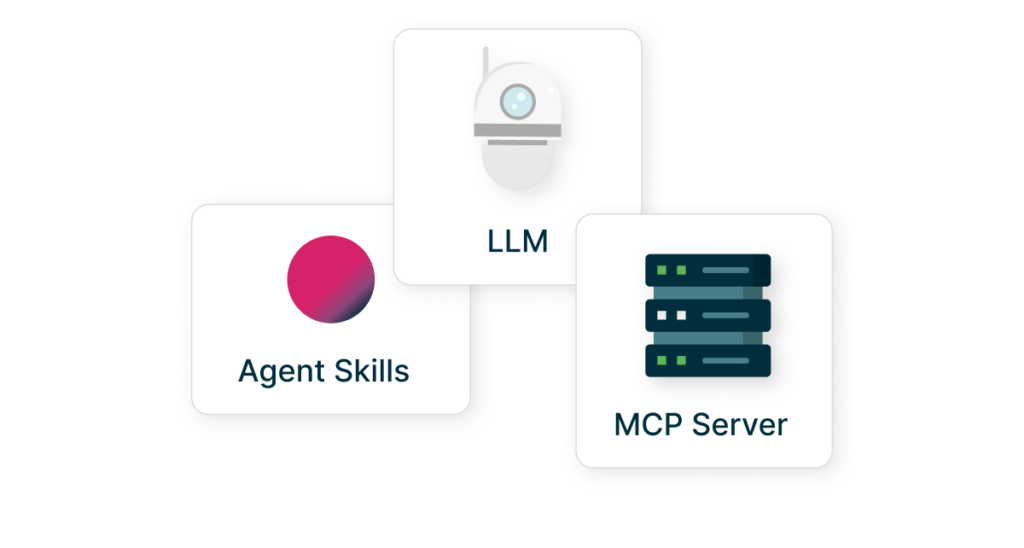
As generative AI and agent workflows become more common and more capable, integrations are transitioning from static, event-driven pipes to dynamic tools that LLM agents can call. Specifically, the Model Context Protocol (MCP) has emerged as an open standard that lets AI agents work with SaaS apps through controlled interfaces.
However, building custom multi-tenant MCP infrastructure in-house demands months of engineering work to manage tenant authentication, tool schemas and audit logs. Because of this heavy effort, checking a vendor’s AI readiness is essential. For instance, platforms with dedicated MCP PaaS features let SaaS teams turn existing APIs and workflows into secure, multi-tenant MCP servers so AI agents can run approved actions safely.
5. Calculate TCO and commercial predictability (15% weight)
Finally, building and keeping integrations in-house creates heavy long-term maintenance debt. In practice, coding a single production integration takes weeks of senior developer time and costs tens of thousands of dollars in year 1 once teams factor in testing, bug fixes and ongoing API updates.
Therefore, when SaaS leaders compare pricing models, they should choose predictable account tiers over usage-based fees that charge extra during sudden spikes in customer webhook traffic.When comparing commercial models, prioritize predictable SaaS tiers over usage-based scaling fees that penalize you for unexpected surges in customer webhook activity.

Embedded iPaaS vendor evaluation checklist
When engineering teams issue an RFP or run a technical proof of concept (POC), they can use this checklist to compare vendors. Review our checklist for evaluating integration platforms infographic for a quick visual guide.
- 1. Multi-tenancy and runtime isolation
- Does the platform run workflows in isolated containers rather than shared app runtimes?
- Are customer credentials and tokens encrypted with tenant-specific KMS keys?
- Are logs separated at the storage layer to prevent slowdowns and data leaks across accounts?
- 2. Enterprise security and token control
- Does the vendor hold a current SOC 2 Type II report covering its embedded engine and token vault?
- Does the platform handle OAuth 2.0/2.1 PKCE checks and token refreshes automatically?
- Does the vendor offer both managed cloud and private VPC hosting for strict data rules?
- 3. Developer and low-code flexibility
- Can engineers build custom connectors in familiar languages (TypeScript, JavaScript, C#) with Git and CI/CD?
- Does the platform include an easy visual workflow builder for product and delivery teams?
- Can developers add custom API endpoints and data rules without hitting rigid platform limits?
- 4. AI and MCP readiness
- Does the platform offer managed MCP PaaS features to expose workflows and APIs as Model Context Protocol tools?
- Can AI agents call those tools with strict tenant permissions and full audit logs?
- 5. Predictable pricing and TCO
- Is pricing based on clear account tiers rather than unpredictable task or volume fees?
- Does the contract include ongoing connector updates, API maintenance and enterprise SLAs?
To evaluate how different platforms in the market approach these architectural trade-offs, explore our guide to embedded integration platform alternatives.
Strategic takeaways for 2026
The evaluation of an embedded iPaaS has moved far beyond comparing pre-built connector libraries. Today, it requires auditing infrastructure-layer isolation, securing tenant encryption, and ensuring compatibility with the rising tide of AI agent interactions.
By utilizing this architectural checklist, technical leaders can confidently select an enterprise integration platform that helps minimize the engineering time otherwise lost to integration debt, and free their roadmap to focus on the product itself.