Updated: | Originally published: | By Hayley Brown
An interesting development from Anthropic has thrown the question ‘is SaaS dead?’ up the in air with the market experiencing a rough patch after they announced Claude Cowork. This autonomous AI tool aims to support both software engineers and other office professionals, handling work from payroll computations to financial market research. Its debut, along with 11 newly launched plugins, reportedly triggered an overnight drop of about $200 billion in market value.
Those hit hardest being publishing and legal tech software, according to the Guardian “European publishing and legal software companies have suffered sharp declines in their share prices after the US artificial intelligence startup Anthropic revealed a tool for use by companies’ legal departments.”
So how far will this disruption go and what SaaS applications could be impacted? What exactly is Claude Cowork and who is it for?
What is Claude Cowork?
Claude Cowork is an agentic AI feature within the Claude Desktop app designed to act as an autonomous collaborator for non-technical knowledge workers. Unlike traditional chat, you assign it a goal and it independently reads, edits, and organizes files in local folders, or connects to apps like Gmail and Google Drive to complete multi-step tasks.
Anthropic say “Claude Cowork handles tasks autonomously. Give it a goal and Claude works on your computer, local files, and applications to return a finished deliverable. If it’s repetitive, messy, or just taking too long, assign it to Claude.”
Many on reddit have described Claude Cowork as Claude Code but dressed up, with one user saying “it’s like Claude Code put on a nice shirt, added a sidebar, and now wants to talk about collaboration.” The overwhelming consensus online is that Cowork is Claude Code but with a friendly GUI. It abstracts the technical setup and runs in its own sandboxed environment, as a result it has become more approachable for the less technical user.
This leads us on to who it is actually for and how they are using it. Primarily the target is the non-tech crowd. For example, a marketing team could use Claude Cowork for campaigns, presentations and other admin. Another target is coders who want to keep things organised and separate workflows. For instance, they are keeping Claude Code for pure coding and using Cowork for adjacent tasks such as writing documentation. Finally there are power users, those using it for browser automation. Training Cowork by documenting steps and run tasks on a loop.
Claude Cowork Use Cases:
- Auto-organizing your downloads folder
- Creating spreadsheets from screenshots
- Drafting reports from scattered notes
Who is Claude Cowork affecting?
Claude Cowork is marketed as a tool that can automate premium legal work, including contract review, summarizing documents, and producing structured analyses. Services many law firms still charge clients for when done by people. Analysts and traders say the product launch wasn’t the sole cause of the stock drop, but it arrived at a delicate time, intensifying worries that AI may undermine models reliant on costly human expertise.
What makes this different from previous AI hype:
- This isn’t marketing copy or customer support automation
- It targets legal and professional workflows, where margins are high
- It signals a shift from “AI assists humans” to “AI replaces chunks of billable work”
So the hard question being asked is if AI can do this reliably, what happens to firms and SaaS companies whose value depends on time-based billing and proprietary expertise?
Claude Cowork and SaaS
The plugins allow Claude Cowork to handle crucial workflows across a variety of fields, these include finance, sales and legal. Interestingly many of these services are provided by traditional SaaS companies. Naturally causing nervousness and fear of losing competitive advantage of established SaaS enterprises.
Many have said that this is the end of SaaS or the ‘SaaS-pocalypse’ but individuals are divided on whether this is justified. Some experts think it is an overreaction while others feel it is a pivotal moment for recalibration of the SaaS market. The reality is that AI is going to continue to grow and have influence. Those who recognise its potential and limitations will more likely succeed.
Especially those who harness useful new tools such as MCP (Model Context Protocol) for SaaS integration capabilities.
Harnessing Claude Cowork with MCP PaaS for SaaS Integration
So you’re a SaaS with end-users who use your native integrations. The SaaS market is shifting now your users want MCP servers to connect to the likes of Claude Cowork. But you don’t want any of the engineering effort. One possible solution is an MCP PaaS.
What is MCP PaaS?
MCP is an open standard that allows developers to build “servers” that expose data and functionality to AI “clients” (like Claude Desktop or other AI agents). Instead of writing custom integration code for every new AI tool, you implement MCP once, and any MCP-compatible client can immediately use your API.
It offers rapid customizable MCP configuration and a multi-tenant architecture that enables rapid delivery of these capabilities.
Discover Cyclr’s MCP PaaS
The Agentic framework is the new standard, discover how to move beyond custom API wrappers and establish your SaaS as an AI-Ready Platform.
Why Wait? Accelerate your AI Roadmap in Days, not Quarters.
Now what does this look like exactly? One possible use case is asking Cowork to process an expense claim.
Let’s walk through a quick example of creating an expense-claim automation project in Claude Cowork that uses a series of MCP Servers connected to Your SaaS.
In this scenario, we first create a Claude project and add an instruction prompt. Next, we will start a Task in Cowork and select a local folder that already contains three receipts in different formats for an expense claim for meals and transportation.
Select the Sonnet 4.5 model and ask Claude Cowork to process the expense claim.
From there, everything happens automatically:
- Claude connects to the first MCP server connection to Your SaaS, calling the “Your SaaS List Employee” tool to check the employee’s details.
- After the record is verified via MCP, it retrieves the employee ID and email address.
- Claude then extracts the relevant data from the receipt images and PDFs.
- Claude triggers additional tools on the connected Expense Report Input MCP Server to create each expense report, one by one.
- Lastly, it connects to a MCP Custom Gmail Server responsible for sending notification emails and sends the completed reports to the user.
All of these tasks are completed automatically with no human intervention and no complex configuration required, just a simple prompt and access to a discrete basket of relevant MCP Servers connected to Your SaaS.
Now, let’s take a look at the results.
Back in Your SaaS Application, the records have been updated using AI-powered data mapping. A corresponding claim summary email has also been generated and sent to your user.
How does an MCP PaaS make this possible?
First, Cyclr provides built-in multi-tenancy, allowing you to manage multiple customer accounts independently within a single platform. Within each customer account, you can create sub-accounts for individual users within the same company. This fully isolated environment ensures that all credentials and data are securely stored and strictly separated between different users.
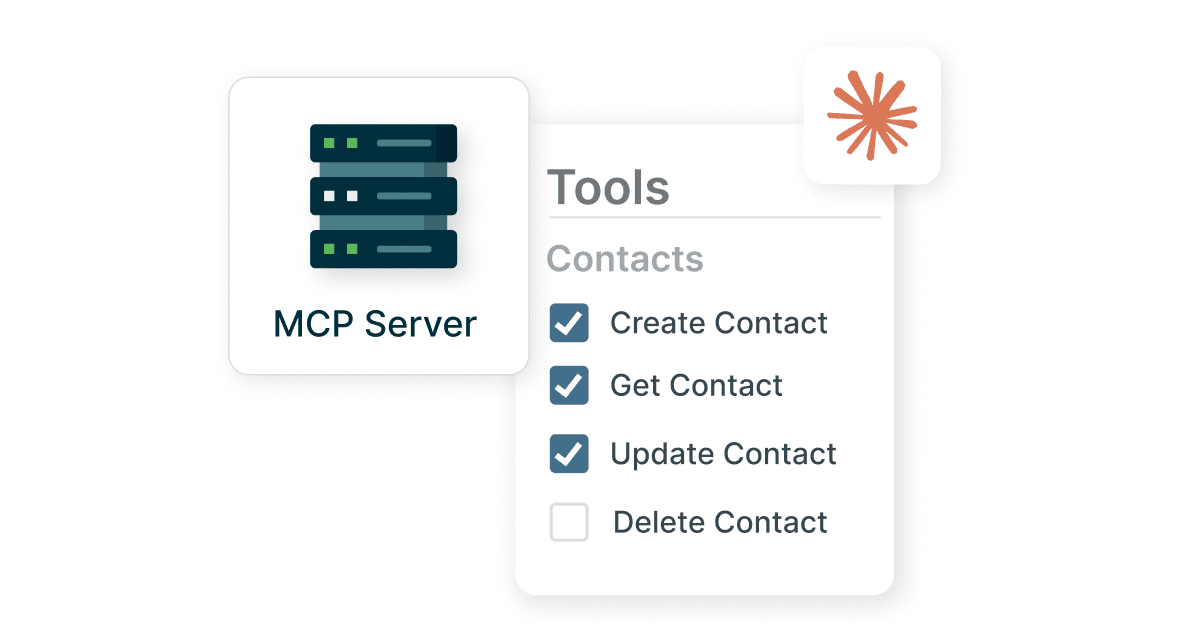
Second, you can create multiple customized MCP Servers under each sub-account. These MCP Servers are configured to expose only the specific API endpoints required by your SaaS. In this example, the MCP Server is limited to reading employee records and creating expense records only.
This approach gives you full flexibility to design MCP Servers that follow your own best practices, while maintaining strict control over access and permissions. You can also create additional MCP Servers for other applications, such as a separate MCP Server dedicated to sending emails through Gmail.
Finally, the MCP Server console provides a complete transaction trail log, allowing you to review every MCP request. This makes auditing, monitoring, and compliance simple and reliable.
If you’d like to enable your customers to connect your SaaS application to Claude Code or Cowork with minimal effort, feel free to get in touch.
Discover Cyclr’s MCP PaaS
The Agentic framework is the new standard, discover how to move beyond custom API wrappers and establish your SaaS as an AI-Ready Platform.
Why Wait? Accelerate your AI Roadmap in Days, not Quarters.


