Updated: | Originally published: | By Nic Butler
As businesses move from experimenting with AI to operationalizing it, one challenge shows up quickly: consistency.
It’s easy to get an AI assistant to do something useful once. It’s much harder to get it to do the same thing predictably, accurately, and repeatedly inside a real workflow.
That’s where AI skills come in.
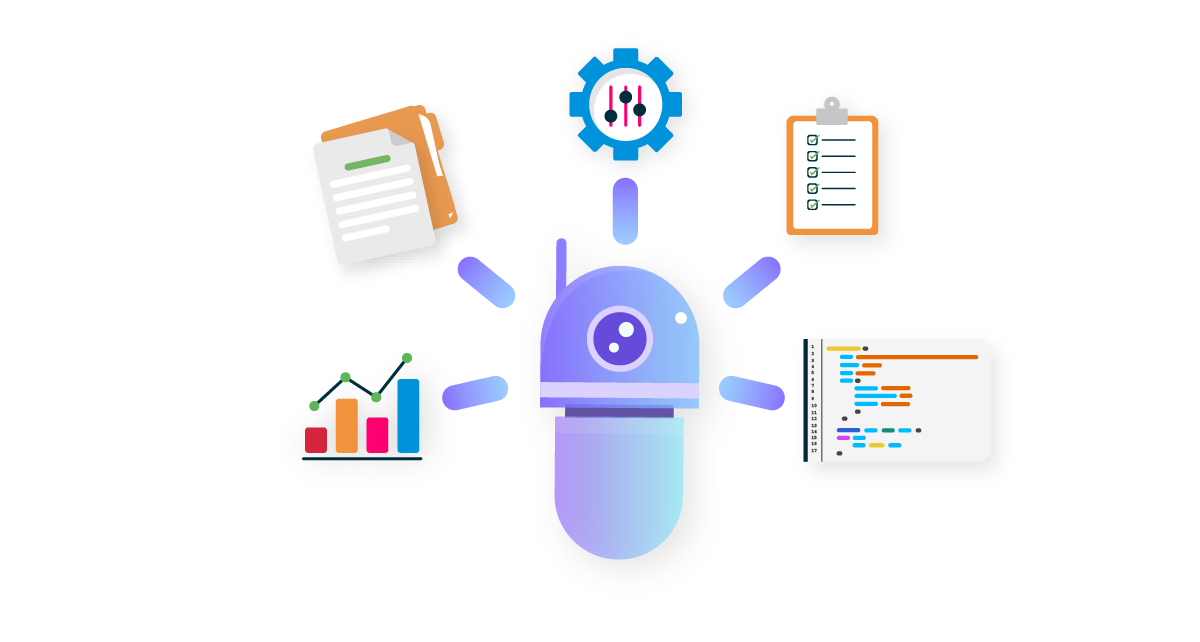
A skill is essentially a predefined set of instructions that tells an AI agent how to complete a workflow task. Think of it like a recipe: instead of leaving the model to infer each step on its own, you define the process, the tools it should use, the order it should follow, and the edge cases it needs to watch for.
For teams building agentic workflows, this matters because large language models are powerful but they can also be variable. The more guesswork an AI has to do, the more likely it is to produce inconsistent results. Skills reduce that variability by giving the model a clearer operating framework.
What is an AI skill?
At a practical level, a skill is a reusable instruction set that helps an AI complete a task in a more structured way.
For example, a business might create a skill to:
- summarize an inbox every evening
- review incidents for anomalies
- analyse transaction flows
- check records for governance issues
- investigate why a process or integration failed
Rather than issuing a fresh prompt every time, the user can rely on a predefined workflow that tells the AI exactly what to do. That might include:
- which MCP service to use
- which API endpoints to call
- what date range to inspect
- how to interpret the returned data
- what sequence of steps to follow
- how to present the result back to the user
This turns a one-off interaction into something much closer to an operational capability.
Why skills matter for reliability
One of the biggest issues with AI in workflow execution is that models can occasionally interpret data differently from one run to the next.
A simple example is date handling.
If an API returns a date in a format that could be interpreted in both UK and US styles, an AI model may get it right most of the time but occasionally misread it. That small interpretation error can create a completely wrong answer downstream.
For instance, if a model is asked how long someone has worked at a company and it misreads the employee’s start date, the final output will be incorrect even though the source data was valid.
This is exactly the kind of problem skills help solve.
A skill can explicitly tell the model:
- what the returned data format looks like
- how specific fields should be interpreted
- which assumptions are safe to make
- which ambiguities need to be handled carefully
That doesn’t make AI perfect, but it does make it far more dependable. In general, the more context and structure you provide, the less likely the model is to hallucinate, improvise, or take an unexpected route through the task.
Skills as the next layer on top of APIs and MCP
Skills become especially powerful when combined with APIs and MCP servers.
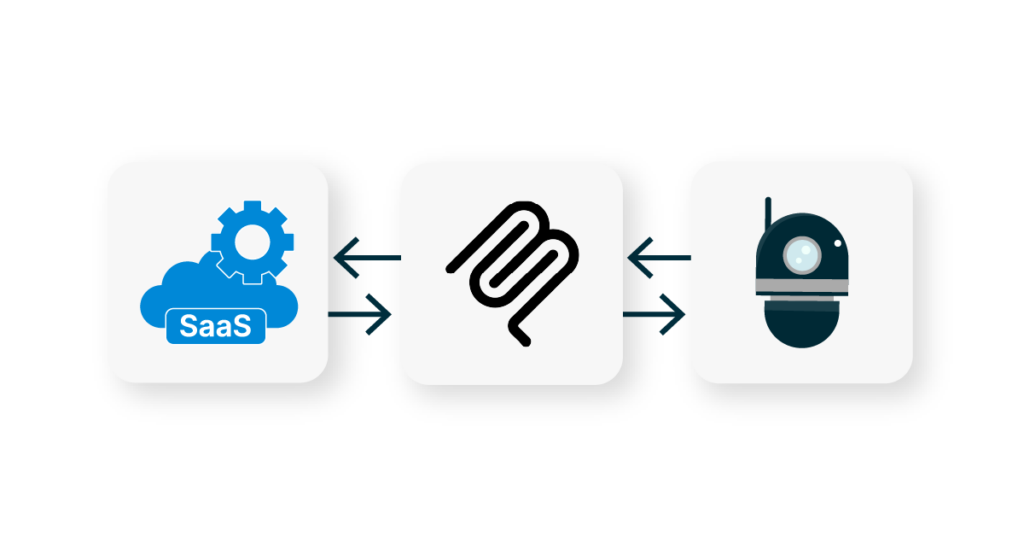
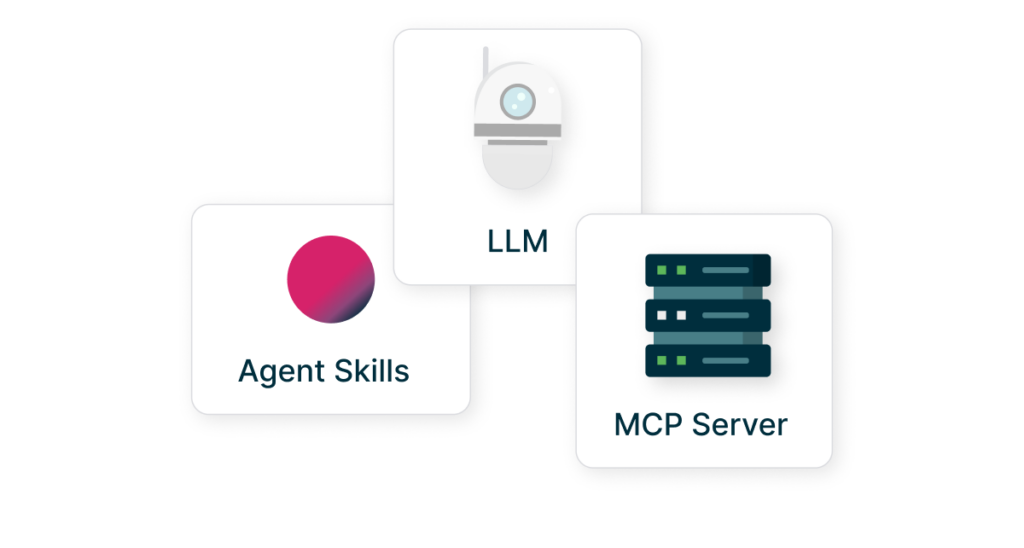
APIs expose capability. MCP servers make those capabilities accessible to agentic systems. Skills add the missing layer: operational guidance.
Without skills, a user might have access to an MCP server and a collection of methods, but still need to figure out:
- what the API actually does
- which questions they can ask
- how to chain methods together
- how to get useful output from the model
- how to avoid common interpretation errors
That’s a lot to expect from every partner or customer starting from scratch.
With skills, you can package your own expertise into reusable instruction sets. Instead of simply exposing endpoints, you can provide ready-made ways to use them well.
For a platform like Cyclr, that opens up an important product opportunity: not just making APIs available for AI, but making them easier to adopt in real agentic workflows.
From raw access to productized AI capability
This is where the idea gets especially interesting.
Organizations can take a group of related endpoints for example, analytics, incident monitoring, or governance checks and package them into focused skills designed around real use cases.
Instead of handing partners a toolbox and telling them to figure it out, you can provide curated skills such as:
- Incident analysis skills that investigate failures and identify likely causes
- Traffic flow analysis skills that review usage patterns and anomalies
- Data governance skills that inspect records for sensitive or non-compliant data
- Operational diagnostic skills that walk through system behaviour step by step
That creates a faster path to value.
A partner no longer has to start with, “I have an MCP server now what do I do with it?”
They can start with, “I need to understand why this process failed,” or “I want to identify unusual customer activity,” and use a skill built specifically for that job.

Why this improves time to value
For partners and customers, the biggest benefit is speed.
Skills provide an out-of-the-box starting point for agentic workflows. They reduce the time it takes to understand an API, design good prompts, and test the right sequence of actions.
They also capture hard-won product knowledge.
If your team already knows the best way to query certain endpoints, interpret a payload, or troubleshoot a recurring issue, you can embed that expertise into the skill itself. That means every partner benefits from the knowledge your team has already built.
The result is a better onboarding experience, faster adoption, and more consistent outcomes.
A skill is more than a prompt
It’s tempting to think of skills as just longer prompts, but they’re more than that.
A well-designed skill can include:
- Task definition: what the AI is trying to achieve
- Workflow steps: the order in which actions should happen
- Tool instructions: which MCP server or API methods to use
- Data interpretation rules: how to read formats and fields correctly
- Decision logic: what to do under specific conditions
- Response guidance: how to present findings back to the user
That level of structure is what turns AI from a general assistant into something that behaves more like a repeatable operational component.
Example: an error analysis skill
Imagine a user asks:
“Workflow ID is failing. Can you find out why?”
A generic AI assistant might attempt to answer, but its approach could vary from run to run.
A dedicated error analysis skill would provide a much stronger framework. It could instruct the model to:
- retrieve the workflow information first
- gather related operational data
- inspect relevant logs or transaction records
- check known failure conditions
- summarize the likely root cause
- present recommended next steps
The value isn’t just that the AI can do the task. It’s that it can do it in a way that is more repeatable, more explainable, and more aligned with how the platform actually works.
And importantly, this is not something most teams will want to build by hand every time. Skills can become substantial instruction assets, which is exactly why packaging and maintaining them centrally can be so powerful.
Building AI skills as a strategic product capability
The broader takeaway is this: as AI adoption matures, value will increasingly come from how well AI is guided, not just whether it is connected.
In other words, exposing APIs to AI is only part of the story.
The next step is creating the structured layer that helps AI use those APIs effectively in real-world situations. That’s what skills offer. They turn platform knowledge into reusable operational intelligence.
For embedded platforms, integration vendors, and SaaS companies building agentic experiences, that creates an opportunity to move beyond simple enablement and toward true productization.
Instead of offering raw access, you can offer usable AI capability.
Discover Cyclr’s Embedded iPaaS
As AI becomes central to modern SaaS, the real differentiator won’t be the model, it will be the infrastructure that connects it to the rest of your ecosystem.
Cyclr’s embedded iPaaS gives you the tools to securely orchestrate data, manage integrations at scale, and empower AI features with the context they need to deliver real value.
Final thoughts
AI skills help bridge the gap between possibility and practicality.
They give teams a way to reduce variability, improve reliability, and accelerate time to value when building agentic workflows. By combining skills with APIs and MCP servers, organizations can package domain expertise into reusable assets that make AI systems easier to adopt and more effective in production.
For companies building in this space, the opportunity is clear: don’t just expose functionality to AI teach AI how to use it well.