Updated: | Originally published: | By Daniel Twigg
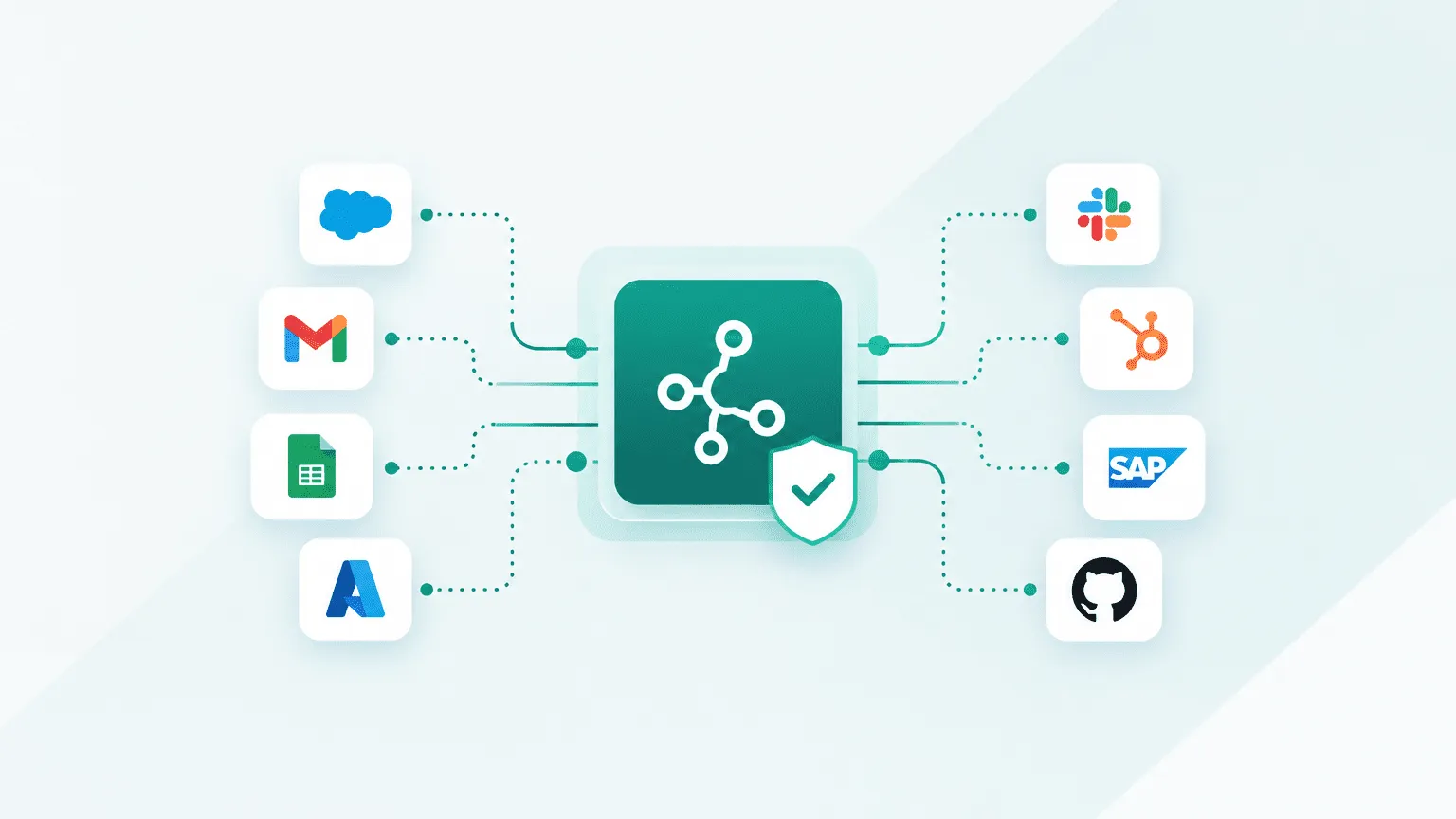
In modern customer experience software, an isolated platform is a churn risk. Customer experience (CX) platforms – spanning contact centers (CCaaS), helpdesks, customer feedback tools and conversational AI – cannot survive as disconnected systems of record. When support agents and AI tools lack immediate access to billing history, CRM records and prior interactions, the result is duplicate effort, slow resolution and frustrated users. By embedding customer data integration directly into your architecture, you can unify telephony, CRM, billing and ticketing records in real time without derailing your core engineering roadmap.
Key takeaways for CX product leaders and CTOs
- The commercial imperative: According to Salesforce’s State of Service report (7th Edition), 88% of service leaders prioritize technology integration to eliminate data silos and support AI initiatives. Furthermore, Cyclr’s Native Integration Amplification benchmarks show that SaaS products with native integrations achieve 10% to 15% higher customer retention – climbing to 18% to 22% higher retention with four or more integrations – alongside a 20% to 30%+ increase in willingness to pay.
- The cost of fragmented CX data: Only 27% of organizations say their customer data is fully unified across sales, service, marketing and commerce teams (Salesforce, August 2026). IBM Institute for Business Value (IBV) 2025-2026 research shows that 74% of CRM customers struggle to improve customer experience because only 26% say most of their customer data resides in their primary CRM.
- Contact center and helpdesk interoperability: Modern CX requires real-time, bi-directional orchestration across CCaaS telephony, helpdesk ticketing, CRM, billing and workforce management (WFM). Relying on external end-user iPaaS tools such as Zapier forces customers out of your interface, fractures the user experience and exposes your accounts to competitors (What is an embedded iPaaS?).
- The AI agent and MCP shift: Service leaders expect 50% of service cases to be resolved by AI by 2027, up from 30% in 2025 (Salesforce), and 71% of executives aim for touchless customer support inquiries (IBM IBV). However, only 21% of organizations feel confident they have the right governance for AI agents, and Cyclr’s A SaaS Guide to MCP report found that only 9.6% of tracked SaaS product lines have shipped a native MCP server.
- The architectural solution: By embedding a multi-tenant integration layer and MCP PaaS (Model Context Protocol Platform as a Service), CX SaaS teams can ship native integrations up to 10x faster, manage high-volume bulk data synchronization and expose governed, OAuth 2.1-protected MCP servers in minutes rather than quarters.
The commercial and architectural imperative for CX integration
Disconnected data is one of the most expensive operational bottlenecks in enterprise software. The average enterprise runs on nearly 900 applications, yet only one-third of those systems are integrated (Salesforce Data Connectivity Research). In Salesforce’s August 2026 study of 3,450 leaders, only 27% of organizations reported having fully unified customer data across sales, service, marketing and commerce teams. Among B2C companies, 46% deal with duplicate or conflicting customer records and 45% cite the high cost of maintaining disconnected systems. Among B2B organizations, 37% say disconnected data actively slows or undermines their response to customer issues.
When CX data is trapped in silos, customer trust erodes quickly. In Zendesk’s 2026 CX Trends Report, surveying more than 11,000 consumers and business leaders across 22 countries, 85% of CX leaders stated that a single unresolved issue or failure to resolve on first contact is enough to lose a customer. At the same time, 81% of consumers expect human representatives and AI agents to pick up right where they left off without backtracking, 74% get frustrated when forced to repeat information across channels and 67% expect support tailored to their prior interactions (Zendesk).
Data fragmentation also stalls artificial intelligence initiatives. IBM IBV’s 2025-2026 research across more than 1,200 enterprise organizations revealed that 74% of customers still struggle to move the needle on customer experience and engagement despite rising AI spend. The root cause is architectural: only 26% say most of their customer data lives in their primary CRM. Nearly three out of four enterprises miss critical context unless their CX software connects to third-party platforms, billing engines and back-office databases. In fact, Forrester’s CX Index research points out that disappointing implementations of AI and automation – where tools lack historical context and integration depth – are a primary driver pulling down brand CX quality scores.
Conversely, when CX platforms unify channel and back-office data, both AI performance and commercial metrics improve:
- Higher AI success and lower service costs: Companies that unify their customer service channel data are 1.4x more likely to achieve a highly successful AI implementation, and service leaders expect AI agents to reduce service costs and case resolution times by 20% on average (Salesforce State of Service).
- Acquisition, retention and expansion gains: Zendesk’s CX Trends research shows that organizations leading in connected, human-centric AI integration achieve 33% higher customer acquisition rates, 22% higher customer retention rates and 49% higher cross-sell revenue. Similarly, Forrester’s CX Index demonstrates that brands excelling in customer experience grow revenue at twice the rate of lagging peers.
- SaaS product stickiness and willingness to pay: On the software vendor side, Cyclr’s Native Integration Amplification research highlights that SaaS products with at least one native integration achieve 10% to 15% higher customer retention, climbing to 18% to 22% higher retention for products with four or more integrations, while customer willingness to pay increases by 20% to 30%+. As Forrester notes, “an embedded iPaaS is a strategic element of digital transformation,” fueling rapid expansion across an iPaaS market that has grown at 38.7% annually to exceed $9 billion (Cyclr iPaaS Market Growth Report).
- The AI readiness gap and engineering capacity protection: In Cyclr’s benchmark report A SaaS Guide to MCP – which evaluated 460 SaaS product lines across 366 companies and more than 30 software categories – only 9.6% of product lines (44 in total, or roughly 1 in 18 SaaS vendors) had shipped a native MCP server (Cyclr MCP PaaS Launch). While mid-market and enterprise vendors lead adoption at 11% to 12%, small vendors sit at just 2% because engineering teams cannot afford to pull core developers off product roadmaps to build and maintain OAuth 2.1 security, rate limiting, API versioning and multi-tenant isolation from scratch (6 Reasons Why You Should Use An Embedded iPaaS Solution).
Contact centers, helpdesks and the CX ecosystem
Modern CX architectures are split across specialized software layers that must operate as a single unit during live customer interactions. For a CX SaaS provider, delivering a 360-degree view means orchestrating data across five core categories:
- Contact center and telephony (CCaaS): Voice, interactive voice response (IVR), call routing, workforce management (WFM) and conversational intelligence platforms such as Amazon Connect, Webex Contact Center, Twilio Voice, RingCentral, Vonage and Verint Engagement Data Management.
- Helpdesk and service desk (ticketing and case management): Issue tracking, SLA management, omnichannel routing and agent workspaces including Salesforce Service Cloud, Freshdesk, Zoho Desk, ServiceDesk Plus, Zendesk and Jira Service Management, connected via Support Integration Connectors.
- Customer experience, feedback and sentiment: CSAT, NPS, CES and sentiment analysis tools such as Simplesat, Medallia and Verint Predictive Experience, unified through Customer Experience Connectors.
- CRM, billing and commerce systems of record: Account hierarchy, subscription tier, payment status and order history in systems like Salesforce, HubSpot, Microsoft Dynamics 365, NetSuite, Stripe and Shopify, synchronized via CRM Integration Connectors.
- Conversational messaging and AI models: Team collaboration, two-way transactional messaging and LLM reasoning connected through Chat Connectors, SMS Connectors and AI Connectors.
Application-critical versus commercially-critical integrations
When deciding what to build in-house versus what to run through an embedded integration platform, Cyclr CEO Fraser Davidson outlines a practical architectural boundary in When Should I Use Embedded iPaaS? Product and engineering leaders should separate integrations into two categories:
- Application-critical integrations: Connections that are fundamental to the core intellectual property and runtime performance of your software itself – for example, low-level SIP trunking or WebRTC audio streaming inside a CCaaS core. Your engineering team should code and own these directly inside your core application.
- Commercially-critical integrations: Connections that are vital to customer adoption, cross-system workflow automation and enterprise buying decisions, but sit outside your core IP. These often surface during sales cycles when a prospect says, “We love your platform, but we need it to sync bi-directionally with our customized CRM, helpdesk and ERP.”
Commercially-critical integrations move outcomes in and out of your platform, trigger alerts across external tools and embed your software into the customer’s daily operations. Delivering commercially-critical integrations through a Native Embedded iPaaS protects finite engineering capacity for core roadmap features while letting product and implementation teams satisfy enterprise integration requirements in days rather than months.
7 core CX integration and orchestration workflow patterns
To build a high-retention CX platform, product and architecture teams should design their connectivity layer around seven concrete workflow patterns. Each pattern requires specific triggers, data transformations, error paths and multi-tenant controls.
1. Real-time contact center screen-pop and call center CRM integration
- Trigger: An inbound voice call or live chat arrives in the CCaaS platform (such as Amazon Connect, Twilio Voice or RingCentral).
- Orchestration: Using synchronous webhooks or Cyclr’s Data on Demand/Proxy API, the orchestration layer queries the customer’s connected CRM (Salesforce, HubSpot) and billing system (Stripe, Younium) in milliseconds using caller ID or an account token. If a lookup fails or times out, fallback logic returns cached account metadata so call routing is never blocked.
- Outcome: Before the human or AI agent answers, the workspace displays unified customer context including subscription tier, open helpdesk tickets, recent orders and lifetime value. This eliminates the repetition across channels that frustrates 74% of consumers (Zendesk).
2. Bi-directional helpdesk-to-engineering escalation and triage
- Trigger: A tier-2 support agent flags a ticket in a helpdesk (such as Freshdesk, Zendesk or Salesforce Service Cloud) as a confirmed product bug or infrastructure incident.
- Orchestration: The data orchestration layer splits, formats and routes the ticket payload to create a linked issue in Jira or Linear, attaches customer diagnostic logs and posts a real-time alert via Chat Connectors (Slack or Microsoft Teams) to the on-call engineering channel.
- Outcome: When engineers update the Jira issue status or deploy a fix, a webhook automatically updates the helpdesk ticket and notifies the support agent, maintaining strict multi-tenant field mapping across every customer’s unique Jira and helpdesk schema.
3. Automated post-interaction feedback loop (CSAT and NPS orchestration)
- Trigger: A case is marked “Resolved” in the helpdesk or a voice call concludes in the contact center.
- Orchestration: After a configurable delay step and decision logic (verifying that the customer has not been surveyed in the past 30 days and that the ticket was not an automated bounce), the workflow triggers a personalized survey invitation via a feedback platform such as Simplesat, Medallia or Verint over email or SMS.
- Outcome: Survey responses and sentiment scores write back directly to the CRM contact record, the originating helpdesk ticket and agent performance dashboards in Verint Workforce Management.
4. Negative sentiment and churn-risk recovery escalation
- Trigger: A customer submits a detractor NPS score, a 1-star CSAT rating or an AI conversation transcript registers high negative sentiment.
- Orchestration: Decision logic inspects the customer’s annual recurring revenue (ARR) and contract tier in the CRM. For high-value accounts, the workflow automatically reopens or escalates the support case, creates an urgent retention task for the assigned Customer Success Manager in the CRM and triggers a high-priority Slack alert.
- Outcome: Gives account teams immediate visibility to intervene before churn occurs, directly addressing the 85% of CX leaders who warn that a single unresolved issue can cost a customer (Zendesk).
5. Conversational voice and chat AI action execution
- Trigger: A customer interacting with a voice or chat AI agent (such as Cyclr customer Neural Voice) requests an account change, appointment booking or order status update.
- Orchestration: Rather than restricting the AI to static FAQ retrieval, the embedded workflow validates identity, updates the CRM (HubSpot, Salesforce, Pipedrive), dispatches a confirmation message via WhatsApp or SMS and logs the structured interaction outcome (Service Embedded iPaaS).
- Outcome: Delivers the touchless resolution targeted by 71% of service executives (IBM IBV) without requiring custom integration code for each customer’s CRM stack.
6. High-volume bulk data synchronization and historical CX ingestion
- Trigger: An enterprise customer onboards onto a CX analytics, WFM or AI platform and must ingest millions of historical tickets, call recordings and CRM records – or run nightly batch reconciliations across data warehouses and MySQL or on-premises databases.
- Orchestration: Using Cyclr’s managed pagination, configurable concurrent processes (up to 100+ on Shared Cloud and fully configurable on Private Cloud), advanced connector rate limiting and ETL data transformation, the platform ingests and normalizes bulk interaction data (such as into Verint Engagement Data Management) without exhausting target API rate limits.
- Outcome: Prevents API throttling and dropped records during enterprise onboarding and large-scale retrieval-augmented generation (RAG) or AI training pipeline hydration.
7. Governed AI agent tool invocation via MCP-triggered workflows
- Trigger: An external or embedded LLM client (such as Claude, ChatGPT, Microsoft Copilot Studio or an internal service agent) receives a natural language prompt from a support supervisor: “Find all open VIP tickets impacted by today’s outage, apply the SLA credit tag and enroll those contacts in the proactive status-update sequence.”
- Orchestration: Instead of exposing raw, unthrottled REST APIs to the LLM, the request hits a tenant-isolated Cyclr MCP server secured with OAuth 2.1. The server invokes an MCP-triggered workflow that executes the multi-system lookup and scoped write actions across the helpdesk, CRM and marketing automation tool, applying data minimization before returning a clean, structured response to the model.
- Outcome: Compresses the lookup, decision and execution loop into a single, auditable and permissioned path across segregated customer Accounts.
How AI has reshaped CX: headless SaaS, MCP, bulk data and governance
1. The shift to headless SaaS and Model Context Protocol (MCP)
As Cyclr CEO Fraser Davidson explains in So do you think SaaS is dead? Is Claude Cowork the nail in the coffin?, SaaS is not dying – it is decoupling from its front-end UI. Users increasingly operate SaaS platforms headlessly through LLMs and AI agents, extracting insights, updating records and triggering workflows without logging into a traditional dashboard. The SaaS application becomes critical infrastructure behind the scenes.
However, traditional REST APIs were not designed for direct LLM consumption. As detailed in Why would you want an MCP PaaS?, APIs expose stateless endpoints whereas AI agents need structured capabilities. Stuffing a 20,000-token API specification into an LLM prompt causes high token costs, latency and hallucinated schema fields. Model Context Protocol (MCP) – an open standard introduced by Anthropic for connecting AI assistants to data sources and tools – solves this by wrapping API capabilities in a structured JSON schema carrying prompts, tool descriptors, scoped resources and authorization tokens (Model Context Protocol (MCP) for AI Integration).
By pairing lightweight Agent Skills (which load procedural domain logic on demand) with MCP servers (which expose safe, structured tools), CX platforms reduce huge API surfaces to compact active context windows while agents execute nested workflows reliably (Agent Skills for LLMs: Building Better AI Systems with MCP-Style Architectures).
Despite rapid buyer demand, Cyclr’s benchmark report A SaaS Guide to MCP – analyzing 460 tracked SaaS product lines across 366 companies – found that only 9.4% to 9.6% (44 product lines, or roughly 1 in 18 vendors) had shipped a native MCP implementation (Cyclr MCP PaaS announcement). At the company level, 24 vendors had reached general availability (GA) while 15 remained in pre-GA beta, preview or experimental stages. Adoption was heavily concentrated among mid-market and enterprise vendors (~11% to 12%) compared to small vendors (~2%), tracking the engineering effort required to harden OAuth 2.1 authentication, rate limits and multi-tenant governance for production AI tooling. Across CRM, work management and support verticals, the report found that task and record CRUD operations dominate – led by create, update, get/list and search tool verbs – and that successful teams follow a “read-first, write-later” sequence, introducing state-changing writes behind explicit OAuth 2.1 scopes and deterministic MCP-triggered workflows.
2. High-throughput bulk data synchronization versus real-time event streams
AI-driven CX requires two distinct data movement architectures operating side by side:
- High-throughput bulk and batch data orchestration: AI models, predictive WFM platforms (such as Verint) and enterprise feedback hubs (such as Medallia) require deep historical context and scheduled batch synchronization. Naive bulk syncs quickly break third-party CRM and helpdesk APIs due to strict rate limits, pagination differences and payload caps. Cyclr’s 600+ application connectors natively manage authorization, paging, API rate limits and ETL data transformation, supported by configurable concurrent processes, advanced connector rate limiting and SSH or on-premises connectivity for legacy databases (Native Embedded iPaaS).
- Low-latency event-driven and synchronous execution: When a customer is live on a voice call or interacting with a conversational AI agent, batch polling is too slow. CX platforms rely on webhook-triggered integrations, synchronous webhooks, 1-minute poll frequencies (or custom polling intervals on Private Cloud) and Cyclr’s Data on Demand/Proxy API to fetch and update external records in milliseconds.
3. Enterprise governance, multi-tenancy and data minimization
As Nic Butler, CTO of Cyclr, notes: “MCP is the architectural foundation that helps agents translate human intent into product actions. At scale, that requires tenancy boundaries, access control and auditability” (Cyclr MCP PaaS launch).
Governance is currently the widest gap in enterprise CX. While IBM IBV found that only 21% of organizations are confident in their AI agent governance, Zendesk reported that unapproved “shadow AI” tool usage by support agents jumped up to 250% year over year in some industries. At the same time, Salesforce’s State of the AI Connected Customer survey of 16,000+ respondents found that 71% of customers feel increasingly protective of their personal data and 64% believe companies are reckless with customer information.
To meet enterprise security reviews, a governed interoperability layer must enforce five controls:
- Strict multi-tenant isolation: One Cyclr Console governs segregated customer Accounts. Every customer Account runs in a ring-fenced multi-tenant environment holding its own credentials, custom field mappings and execution logs, preventing cross-tenant data leakage (Enterprise Governance and Managed Operations).
- OAuth 2.1 authorization and role-based access control: Cyclr’s MCP PaaS enforces OAuth 2.1 on the MCP server URL, ensuring an AI agent can only invoke a tool if it presents valid user-linked credentials and approved scopes.
- Data minimization and endpoint packaging: Never expose every API operation or raw payload containing unnecessary personally identifiable information (PII) to an LLM by default. Cyclr packages endpoints so the agent sends only required parameters and receives only the filtered fields needed for the task.
- Custom objects and per-customer adaptability: Enterprise CX buyers heavily customize their CRM and helpdesk schemas. Cyclr lets teams and self-service users adapt integration workflows and MCP server contexts to include custom fields and custom objects without per-customer engineering rebuilds (Deployment Velocity and Automation for the Agentic Era).
- Auditable compliance and hosting flexibility: Cyclr is SOC 2 Type II accredited and GDPR compliant, offering Shared Cloud residency across US, UK or EU regions, as well as dedicated AWS or Azure Private Cloud and GovCloud deployments (Native Embedded iPaaS).
Evaluating platform infrastructure: proof from leading CX platforms
When SaaS companies rely on external end-user iPaaS tools like Zapier to handle customer integrations, they force users to leave their application, pay for a separate third-party account and browse a public directory populated by direct competitors (What is an embedded iPaaS?).
Product and engineering leaders avoid this friction by embedding customer data integration software directly into their application architecture. Cyclr operates as a white-labeled, multi-tenant embedded iPaaS and governed control plane that sits invisibly inside your SaaS product. Rather than placing unpredictable AI inside the workflow builder itself, Cyclr acts as a deterministic specification engine – giving technical and semi-technical builders certainty over how data flows into, through and out of connected systems and AI applications (The role of Embedded iPaaS in the AI Gold Rush).
Leading customer experience, feedback and conversational AI providers rely on Cyclr to run their integration ecosystems:
- Simplesat (Customer feedback and CX management): Simplesat needed two-way connectivity to trigger CSAT, NPS and CES surveys from helpdesk events and route collected feedback into hundreds of CRMs and support tools. By embedding Cyclr, Simplesat scaled from maintaining 5 to 6 native integrations to offering connectivity across 600+ pre-built connectors, launching new integrations in 1 to 2 weeks at a steady cadence of two new integrations per month. Support engineers use Cyclr’s execution logs to troubleshoot customer integration errors independently without escalating to core developers. As Elliot Fox, Head of Customer Success at Simplesat, explained: “Cyclr gives us the ability to never say no. Now, we always say, yeah, we can do that. We can build integrations quickly so we can satisfy client use cases and build solutions for them based on their feedback” (Native, Service or Branded Embedded iPaaS?).
- Verint (Enterprise customer engagement and workforce management): A global leader in contact center workforce management and CX automation, Verint is a marquee enterprise customer across Cyclr’s Native Embedded iPaaS, Service Embedded iPaaS and MCP PaaS offerings. Cyclr maintains a specialized suite of Verint connectors – including Verint Engagement Data Management (EDM), Verint Engagement Orchestration, Verint Predictive Experience, Verint Knowledge Management Enterprise and Verint Workforce Management (Verint Connector Guides). Through Verint EDM, enterprises normalize unstructured interaction data across the business (covering case creation, privacy status checks, legal holds and custom CX invitation data), and every connector method can run inside an integration workflow or be exposed as a governed MCP tool.
- Medallia (Enterprise customer and employee experience): Recognized alongside Verint and Simplesat on Cyclr’s Native Embedded iPaaS platform, Medallia illustrates how enterprise experience platforms connect survey signals, contact center transcripts, CRM account records and ticketing workflows inside a multi-tenant, SOC 2 Type II governed environment.
- Neural Voice (Conversational voice AI for CX): Neural Voice delivers real-time, voice-to-voice AI interactions for customer service and sales. Using Cyclr, Neural Voice connects its voice AI agents with CRMs such as HubSpot, Salesforce and Pipedrive via reusable templates and triggers automated follow-up workflows across SMS, WhatsApp and email without writing custom code. Harry Finch, Lead Software Engineer at Neural Voice, noted: “We can simply use its visual builder to drag and drop, link and map methods, eliminating the need for bespoke integration frameworks” (Cyclr).
Architectural decision guide and implementation playbooks
Turnkey integration hub solutions for B2B platforms
A turnkey integration hub allows B2B SaaS platforms to present a self-service directory of native integrations and MCP servers directly inside their own application UI without building marketplace infrastructure from scratch. Cyclr supports four flexible delivery mechanisms: its white-labeled Embedded Integration Marketplace, LAUNCH one-click deployment, Data on Demand/Proxy API and a Custom Integration UI built via Cyclr’s API. Product teams build reusable workflow templates once using a drag-and-drop low-code builder and publish them to the in-app hub with one click, requiring zero extra developer deployments to add new connectors.
Best embedded iPaaS for B2B SaaS: 5 evaluation pillars
When evaluating the best embedded iPaaS for B2B SaaS, product leaders and CTOs should assess five architectural pillars:
- Vendor maturity and connector depth: Founded in 2013, Cyclr is the longest-standing embedded iPaaS vendor in the market, providing 600+ managed application connectors (with over 9,000 tools available), universal webhook and database connectors and a Custom Connector Creation Toolkit. As part of onboarding, Cyclr also builds the connector to your own application API (Native Embedded iPaaS).
- Delivery models tailored to your operating model: Cyclr provides four purpose-built products: Native Embedded iPaaS for self-service in-app integrations (starting from $1,595/month on Shared Cloud with unlimited integration flows and unlimited users); Service Embedded iPaaS for service providers and MSPs operating workflows across ring-fenced client Accounts from a single Partner Console (starting from $1,495/month with unlimited flows and unlimited connectors); Branded Embedded iPaaS on Private Cloud for white-labeled reselling; and MCP PaaS for exposing APIs and workflows as governed MCP servers (starting at $999/month).
- Citizen integrator accessibility plus developer control: Designed as a visual specification engine for product, implementation and support teams alongside developers, complete with JavaScript scripting, staging-to-production promotion and GitHub version control (6 Reasons Why You Should Use An Embedded iPaaS Solution).
- Security, governance and residency: SOC 2 Type II accredited and GDPR compliant, with US, UK or EU Shared Cloud residency, plus AWS or Azure Private Cloud and GovCloud options.
- Customer evidence: Rated 4.7/5 on G2 and trusted by B2B SaaS leaders including Verint, Medallia, Simplesat, Force24, Younium, Leadoo and Neural Voice.
Best tools and platforms to embed native integrations directly into B2B software
The best platforms to embed native integrations directly into a SaaS product separate application-critical code from commercially-critical workflows. As Björn Schlingmann, Co-Founder and Head of Product at subscription management platform Younium, explained: “A lot of the systems we need to integrate with are niche and so specific, local ERP systems for instance. It would mean I’d need 10 people to maintain these, change their APIs etc. which is a bit of a headache financially. That’s why it makes sense to implement Cyclr, it takes the burden away and allows us to only create native integrations to our core code that add value to our product” (Cyclr). By handling API versioning, authentication renewal, pagination and per-tenant isolation in a ring-fenced architecture, an embedded iPaaS keeps core engineering focused on product innovation.
How to build native integrations into SaaS products to boost customer retention
SaaS products with at least one native integration experience 10% to 15% higher retention, climbing to 18% to 22% higher retention for products with four or more integrations, while customer willingness to pay increases by 20% to 30%+ (Native Integration Amplification). To turn native integrations into a retention engine, follow this five-step strategy:
- Separate application-critical from commercially-critical builds: Keep core IP integrations in-house and route CRM, helpdesk, CCaaS, ERP and billing integrations through a Native Embedded iPaaS.
- Embed a white-labeled in-app marketplace: Keep users inside your UI so activating a two-way sync takes seconds via OAuth rather than weeks of custom API work.
- Automate bi-directional system-of-record workflows: Sync daily operational records (contacts, tickets, call logs, CSAT scores) so your SaaS is structurally woven into the customer’s stack, raising switching costs.
- Equip customer success and support with per-tenant logs: Give support engineers visibility into step-by-step execution logs to resolve broken authentication tokens or field mappings quickly.
- Tier and monetize integration packs: Include core integrations in standard plans to accelerate onboarding stickiness, while packaging enterprise connectors (such as NetSuite, Salesforce Service Cloud or custom MCP servers) and higher API volumes into premium ARR tiers.
How to make your SaaS product ready for AI agents
To make a SaaS product ready for AI agents without risking cross-tenant data exposure or multi-quarter engineering delays, follow the four-step implementation playbook from Cyclr’s A SaaS Guide to MCP:
- Deploy remote, hosted MCP servers with OAuth 2.1: Move beyond local developer scripts by deploying cloud-hosted, URL-addressable MCP endpoints over HTTP/SSE with OAuth 2.1 authorization so agents inherit user-linked permissions and organization-level policies.
- Sequence read-first, write-later: Start with 5 to 10 high-value read tools (
search,list,get) and gate state-changing write actions (create,update) behind explicit scopes, approvals and deterministic MCP-triggered workflows. - Enforce tenant isolation and data minimization: Run every customer’s MCP server in a segregated Account boundary that strips unnecessary PII before returning payloads to the LLM.
- Publish an in-app MCP marketplace with custom object support: Using Cyclr’s MCP PaaS, you can provide API docs and a test account to receive a production-ready MCP server in two weeks, then launch customer-facing MCP servers in minutes with full support for customer-specific fields and objects (Ecosystem and End-User Experience).
Next steps: unify your CX integration and AI roadmap
CX SaaS platforms can no longer treat third-party connectivity and AI agent access as separate backlog items. Whether your customers need sub-second contact center screen-pops, high-volume historical ticket ingestion or governed MCP servers for AI agents, a multi-tenant embedded integration layer gives you the speed and control to deliver without pulling engineers off core product features.
Ready to see how Cyclr can accelerate your integration roadmap and make your platform AI-ready? Book a demo with our team or explore MCP PaaS to see how quickly you can launch governed integrations and MCP servers inside your product.


