Updated: | Originally published: | By Fraser Davidson
An embedded iPaaS solution can be the answer to many SaaS companies’ integration woes and we’ve got a number of reasons why you may want to start using one.
Summary
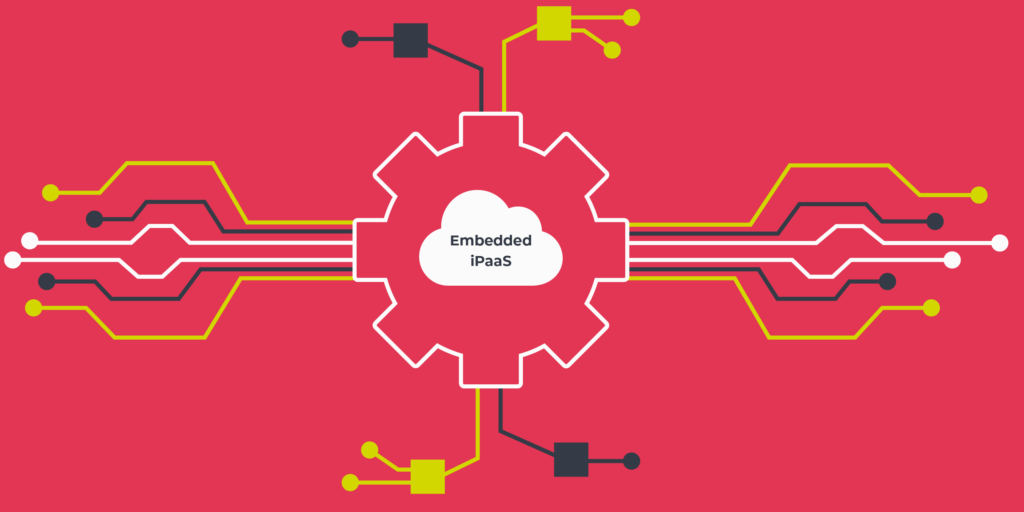
An embedded integration platform as a service (embedded iPaaS) is an integration engine that sits directly inside a B2B SaaS application. It allows software companies to build, deploy, and manage native third-party integrations using pre-built connectors, visual workflow builders, and embedded user interfaces—without building custom integration architecture from scratch.
Key reasons to adopt an embedded iPaaS
- Native user experience: Keeps users inside your product rather than sending them to third-party automation tools.
- Customer retention: Protects data ownership and eliminates churn risks from external integration middleware.
- Faster speed to market: Cuts integration build cycles from months to days with reusable connectors.
- Cross-team delivery: Enables technical and non-technical teams (product managers, solutions engineers) to deliver integrations.
- Reduced maintenance overhead: Shifts ongoing API maintenance, schema changes, and auth updates to the platform.
- Unified delivery model: Supports both self-service app marketplaces and bespoke, custom customer workflows on one engine.
1. Native integrations offer the best customer experience
Firstly, customers want their problems answered ‘right here, right now. If they want to integrate your application they want to be able to achieve this simply. Without leaving your application environment. In other words, they want the integration to be ‘Native’.
Non-native integrations are when the customer has to leave your application to achieve an integration result, Zapier for instance. This is either provided by the application at the other end of the integration flow. Alternatively, it is provided by an independent (off-platform) provider of integration solutions.
An embedded iPaaS such as Cyclr on the other hand sits invisibly within your SaaS application, the beauty of being white-labelled is that the integrations can be designed and deployed with your branding. Therefore, a range of native integrations can sit happily in your SaaS and users aren’t sent off here there and everywhere. Plus your developer team haven’t had to wade through a huge backlog to achieve them.
If you are weighing external automation tools against native capabilities, review our breakdown of embedded iPaaS alternatives and delivery approaches.
2. An Embedded iPaaS helps retain control of your customer relationship
Secondly, when a customer has to leave your SaaS application to achieve an integration you are losing a part of the ‘control’ with the customer. This is because you are introducing the possibility for the customer to be invited to switch from your application to another. As well as for the trusted relationship to move from you to a third party.
For instance, you are a CRM and a third-party application delivers the integration to your CRM. They may also offer other CRM integration therefore the ability for the customer to migrate/switch from your application to another. If the integration is native and/or delivered via an embedded iPaaS then this risk is reduced and you haven’t got that worry.
3. Your time to market for new integrations is vastly diminished
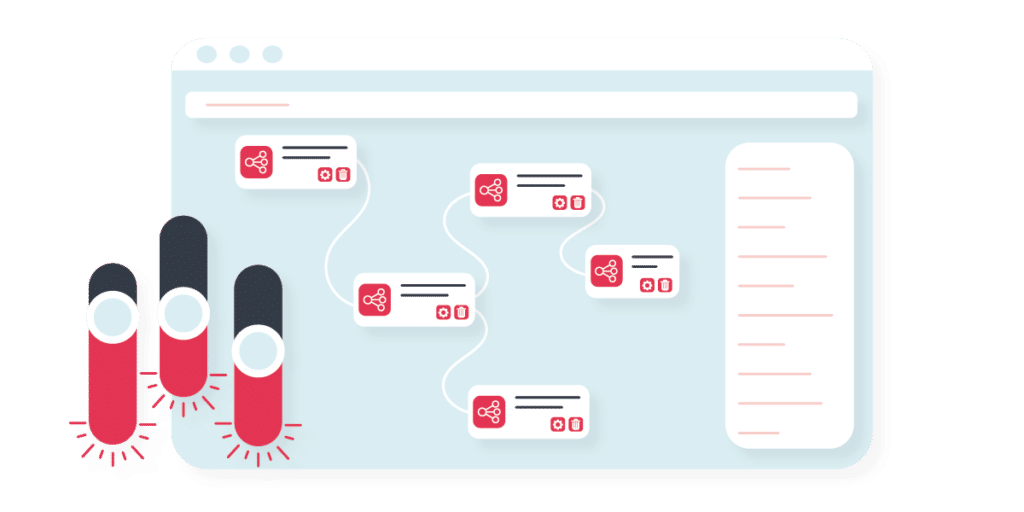
Next, you’ll find that an Embedded iPaaS is like a box of Lego bricks with pre-built components. They provide an environment designed for creativity and the ability to build whatever you choose within limited boundaries.
An embedded iPaaS platform allows you to focus on the solution to your customer needs. Rather than the need to build, manage and maintain the component building blocks of the solution. With an embedded iPaaS platform you should be able to switch on new integrations rapidly, simply by activating them within your integration platform’s environment. No need for scheduling builds and ongoing maintenance. The embedded iPaaS provider should resolve this.
4. Integrations can be delivered by developers or commercial staff
This one is a gooden, why? Well, a well-designed embedded iPaaS toolkit should be appropriate and accessible to both developers (technical) and commercial staff (non-technical).
Integrations are a critical part of customer satisfaction and ‘winning deals’. Therefore the ability for integrations to be rapidly delivered by those that understand the problem (the data flow) and are in communication directly with the client is critical to the resolution. Truly resolving integration speed to market and responsiveness relies upon integration being able to be owned by the appropriate team at the appropriate time. Shy away for a solution that is designed for one single internal audience.
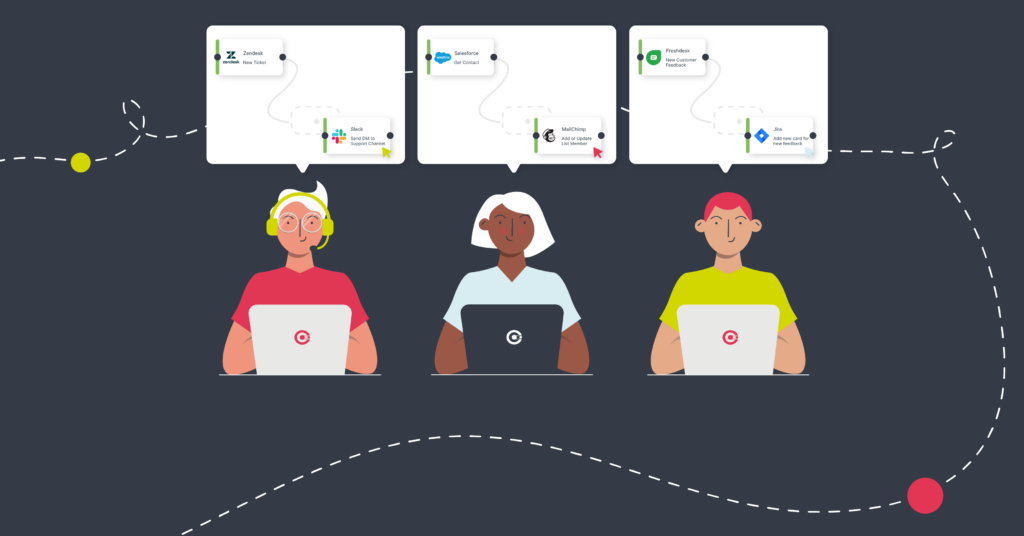
Start championing your existing employees and upskill them to become Citizen Integrators/Developers. They’ll be able to design, build and deploy integrations and let your developers focus on your core product functionality.
5. An Embedded iPaaS saves substantial development time and cost
SaaS companies are just that, companies. Developing integrations from scratch can be costly from a build and maintenance perspective. Both in time and therefore money.
Developing integrations requires a team or a proportion of an existing team. Using an embedded iPaaS platform can substantially save on the resource required to deliver integrations. As well as amplify the effectiveness of the existing integration team. Enabling them to manage a much larger, more responsive, integration suite.
An embedded iPaaS platform should be competitively priced against the direct cost of providing such solutions yourself.

6. A single platform for in-app self-service and custom integrations
Why use two methodologies for fulfilling your user’s integration requirements? While self-service integrations are a huge benefit to both users and development teams, there are always going to be exceptions when it comes to integration requests.
Therefore, iPaaS platforms ensure you’re covered in both eventualities. This means you can create and publish self-service integrations as well as empower your team to create bespoke, private integrations for your users. This opens customisation revenue opportunities while ensuring that all of your team use a single platform.
The evolution of embedded iPaaS: From standard integrations to AI connectivity
SaaS integration requirements are expanding rapidly. While embedded iPaaS originally emerged to help software vendors deliver standard app-to-app integrations without engineering backlog pressure, modern software products now require governed interoperability across traditional APIs, headless interfaces and AI assistants.
Integration is no longer confined to fixed UI dialogs. With headless enablement, SaaS platforms can expose integration workflows and connected data programmatically via API, giving development teams complete control over the end-user experience.
At the same time, AI applications and agentic tools need structured, secure access to live product data. The Model Context Protocol (MCP), an emerging open standard, provides a common interface for AI models to query external systems and trigger actions. Rather than writing custom, unmonitored code for every AI client, platforms can use MCP PaaS to turn existing APIs and workflows into managed, customer-facing MCP servers. This ensures AI interactions remain governed with proper authentication, scoped permissions, tenant isolation and audit logging.
Whether powering an in-app marketplace through Native Embedded iPaaS or enabling MCP-triggered workflows for AI assistants, a modern embedded integration platform serves as the central foundation for all external product connectivity.
Are you looking for an embedded iPaaS provider or looking to switch? Get in touch with the team and discuss your integration needs.